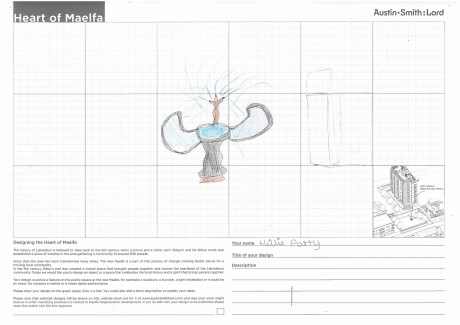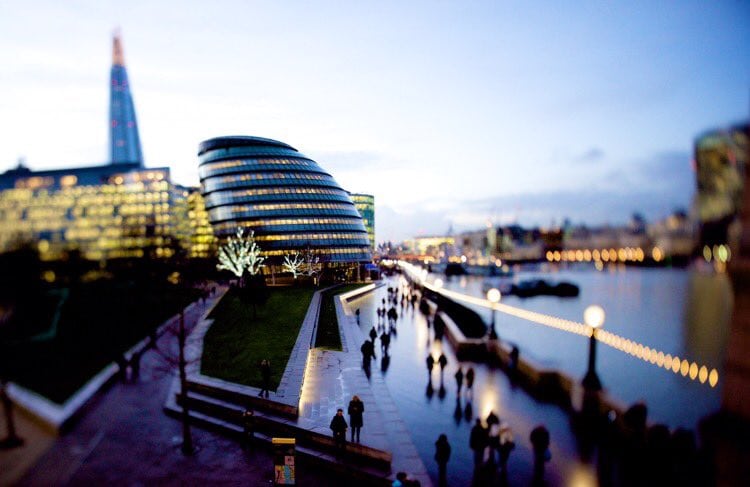

The search for the first London Borough of Culture has been launched (by Rob Firman, Austin Smith:Lord)

london

The search for the first London Borough of Culture has been launched (by Rob Firman, Austin Smith:Lord)

I wrote in December about mayor Sadiq Khan’s plans for a London Borough of Culture award scheme which aims to encourage and support London Boroughs to invest in the provision of arts and culture infrastructure. Now that the scheme has been formally launched, it seems like a good time to consider what impact the initiative may have on the capital.

Rob Firman, Austin-Smith:Lord

BOROUGHS WILL COMPETE FOR £3M OF ARTS FUNDING

The mayor, who announced on June 30th that the first London Borough of Culture would be given the title for 2019, said, “I want all Londoners, rich and poor, young and old, to be able to make the most of London’s incredible cultural landscape and reap the rewards”.

The competition will see all 32 of London’s boroughs given the opportunity to bid for more than £1m of funding to stage a programme of cultural events and initiatives. Two boroughs will be named as winners in February 2018, and given the title of London Borough of Culture for 2019 and 2020 respectively. A total budget of around £3m has been allocated for these awards.

Boroughs will be chosen based on their “artistic vision and ambition to deliver outstanding cultural initiatives in their local area, putting communities at the centre of the programme’s design and delivery”. In addition to the winning entries, a further £600,000 will be available to six boroughs who do not win the title, but who put forward “exemplary projects”.

Mayor Khan has suggested that the scheme is “not simply about celebrating cultural gems”. He has highlighted that culture can connect communities, regenerate areas and inspire individuals to experience culture – not just recreationally but also as a profession. With winning boroughs expected to contribute at least 30% of the funding as additional investment, Khan is clearly looking to boroughs for a real commitment to culture.

The idea has clearly been inspired by the UK city of culture concept, which itself took inspiration from the European capital of culture programme, a scheme which has been transformative for UK cities like Liverpool and Glasgow.

Of course, in London, many boroughs are the size of some small cities – Barnet being the largest of the boroughs, and home to some 380,000 residents.

WHAT DIFFERENCE WILL IT MAKE?

It is clearly in the outlying, poorer boroughs where the opportunity for change is greatest. Residents of Richmond for example, already have access to a choice of 7 theatres, 2 art galleries, 2 museums and have the luxury of Kew Gardens and Hampton Court Palace on their doorstep, offering a wide range of festivals and events.

The cultural options for the 185,000 residents of Barking and Dagenham are, on the other hand far less grandiose, with 2 theatres and 2 historic houses suggesting potential room for expansion of the cultural infrastructure. It’s these sorts of inequalities of course, that the Borough of Culture award seeks to redress – encourage investment in infrastructure, engage with communities and improve quality of life for thousands of people.

The social and economic benefits of the scheme could be immense. Liverpool’s reign as European capital of culture in 2008 saw an increase in visitors to the city of around 34%, generating over £750m for the economy. Media coverage of the city’s cultural attractions double, and for the first time in decades, positive stories focusing on social issues outweighed the negative. And research found 85% of residents agreeing that Liverpool was a better place to live than before.

That said, it is questionable what can be achieved with a £1m investment – a sum that won’t go far when it comes to infrastructure projects. And with a deadline of 7th December 2017 for entries, there is precious little time available for boroughs to develop considered bids that will have lasting value for their communities.

On the face of it, the amount might in fact favour (at least in the short term) those boroughs that already have infrastructure in place, are more able to stage events and that already attract high numbers of visitors.

But surely the objective in the long term (if not the short term) must be to bring the arts and culture to the outer boroughs, to poorer areas, where residents have limited opportunities to visit local theatres or museums, or enjoy exhibitions and festivals – areas which struggle to attract visitors and investment.

This is where the London Borough of Culture can have a real and lasting impact. Where the funding is invested in creating performance spaces from land which has long since fallen into disrepair and misuse. Where local community groups are perhaps given a chance to perform to a wider audience for the first time. This, after all, appears to be the ambition of the project.

And with both Bexley and Havering recently announcing their intention to bid for the title, the signs are good that there will be plenty of applications from outlying boroughs.

THE POTENTIAL FOR A 32-YEAR CYCLE OF INVESTMENT

We should also remember that there is real long-term potential across the whole of London here. With an annual award, the opportunity for boroughs lies not just with the immediate prize of being crowned London Borough of Culture in 2019 or 2020.

Against a backdrop of ongoing austerity and the housing shortage priority, the outer boroughs can develop their infrastructure strategically for the long term using the Borough of Culture as a target. So rather than abandoning arts and cultural infrastructure altogether, development can be enshrined in local planning.

After all there are 32 boroughs, and given it is unlikely that the same one will win twice in quick succession, the potential is for a 32-year cycle of arts and cultural investment in the city.

But as always, politics could come into play. Despite that the scheme would appear to be a vote-winner, delivering a better perceived quality of life and a boost to the local economy – whether the scheme continues after 2020 remains to be seen, and may depend on whether Khan is re-elected in May 2020.

It would be a shame if it ends there. The potential rewards for Londoners, particularly in outlying boroughs are huge. I grew up near Hull and left at age 18 feeling it was something of a cultural desert. To see that 90% of its population has engaged with the arts since it became UK City of Culture this year is testament to the power of arts and culture to transform perception and if Hull can change perception to that extent it should be a no-brainer for London boroughs to aim for this award.

With the emphasis for so many boroughs squarely on the provision of housing, local government needs to consider how they will help to provide and maintain a good quality of life for its residents. With ever increasing and diverse populations, they need to work to bring communities together in greater harmony. Khan has recognised that cultural infrastructure does just that.

Launching the competition, Khan commented, “now, more than ever there is a pressing need to reach out to our neighbours and celebrate London’s unique and diverse culture”.

It seems that the focus on culture and the arts that Khan’s initiative will bring, could be just what London needs.

Could industry wide collaboration be part of the solution to tackling Brexit uncertainty?

taylor-leopold-105924_slider

Could industry wide collaboration be part of the solution to tackling Brexit uncertainty?

By Murtaza Rizvi, Chair of RIBA Bristol & Bath and Architect at Austin Smith Lord, Bristol Studio.

Whether as individuals we voted Remain, Leave or not at all, there is one thing on which we can all agree: the vote on Brexit might be over and the decision made, but uncertainty around the implications lingers on.

Murtaza Rizvi is Chair of RIBA Bristol & Bath and Architect at Austin Smith Lord, Bristol Studio


A leading annual survey prior to the EU Referendum, found that only 15% of property and construction executives favoured a UK exit from the EU. One of the feared implications of leaving included the risk of increased project costs if the UK skills shortage were to worsen through reduction of free movement of labourers and skilled workers. Additional concerns included impact on free movement of goods within the EU, risk to community development and infrastructure investment, as well the possibility that collaborative research undertaken as part of the EU would be under threat.

At the same time, it has been argued that free movement of materials could be solved through the UK negotiating its own trade agreements with the EU and other importing areas, such as China and the USA. Ahead of the vote, Chairman of JCB Lord Bamford voiced support for the Leave campaign, convinced Brexit would cut the costs of bureaucracy so much that any additional losses incurred would easily be covered.

From an architecture perspective, however, survey results published by RIBA itself earlier this year painted a more pessimistic picture post-Brexit: 61% of respondents had had projects delayed, or put on hold, plus 37% seen projects cancelled. In total, 69% of the 1,100 RIBA members canvassed said they felt there would be a negative impact on the profession, plus 60% forecast the same for the built environment, as a whole.

So where does all this confusion leave us in the wider construction sector?

I spoke recently at a RIBA South West Brexit Briefing, on a panel alongside NBS and RIBA. The event focused on the economic outlook for the UK property market and construction industry, plus lessons learnt from previous periods of economic turbulence. Having listened to both my fellow speakers and the audience feedback, here are my three key takeaways regarding how construction can move forward during these times of uncertainty:

1. CREATE A ROBUST BUSINESS STRATEGY AND INVEST IN NEW TALENT

One feeling strongly and widely expressed was that practices and architects really can withstand times of turbulence like these and that the same goes for the sector at large. The importance of building resilience through succession planning was much emphasised, as was the benefit of having a good diverse workforce – helping to reinvigorate company culture with different ideas and fresh approaches.

A cornerstone of building resilience is having a good business plan. There can be the tendency amongst architects to be exceptionally good at designing, but less strong at managing a business with the future in mind – in uncertain times, there is no room for either/or; a successful, sustainable practice has to be skilled at both. It also needs a sound marketing strategy to get the message out there, communicating its core creative and truly understanding how best to meet the needs of clients.

Planning and strategy is vitally important, but so too is being agile and adaptable. When it comes to human resource, a dynamic team needs to be comfortable with an element of risk-taking if it is to harness the energy of more youthful talent, but balanced by the sense of responsibility that comes with experience. As generations move on, letting go can be difficult, but preparing for retirement of key personnel is critical.

2. EMBRACE AND ADOPT NEW TECHNOLOGY
According to IBM, we create 2.5 quintillion bytes of data every single day – so much, that 90% of total data in the world today has been created in the last two years alone. The numbers are staggering and irrefutable evidence why we simply cannot expect to manage data today in the same way we did pre-Internet.

Given this global megatrend in data growth and management, it is essential that we in construction are using the latest computer programmes and mobile applications, plus learning and employing new digital skills on an ongoing basis. Digital is effectively cascading down the construction supply chain, with use of Revit and NBS Create as just a few examples.

Clients are increasingly looking for more effective management of their built assets, with many clients now asking for BIM and whole-life costing. So, if clients want that data for managing their assets; architects, in turn, will increasingly be demanding manufacturers get their products in a BIM-compliant format for 3D-modelling if they hope to be specified. We can all push each other for the client.

To be an architect now we must continue to develop skills in computer systems and be able to transfer knowledge to those realising our designs on site. In the space of a few years, though, this paper-to-digital transition period will be gone.

3. COLLABORATE TO CREATE CLIENT-CENTRIC PROJECT TEAMS
As architects, we have the skills to help clients at the start of a project develop a business plan and explore the financial ‘value’ of proposals through feasibility studies. However, the trend of late seems to be towards less collaborative working than before, with architects bought onto projects later and taken off earlier. The problem is that often there is the belief that architects don’t care about cost when the truth is, a good architect see’s associated value and opportunity when it comes to investment and return on projects.

With traditional procurement where the architect does everything proving less common nowadays, the challenge is to look at ways to help create more client-centric project teams. For architects to be perceived as value drivers, we will need to collaborate better and more.

In this regard, joint project insurance might prove of interest, as does an approach where project partners combine and share discipline models, merging all records into one data-rich integrated project story. It is all about collaboration and communication, with the client being at the heart of the project.

IN CONCLUSION: CONFIDENCE AND CAUSE FOR CAUTIOUS OPTIMISM
In conclusion, RIBA Director of Practice Lucy Carmichael talked about how the RIBA are providing a strong voice for the profession and there are good reasons to be cheerful going forward:

“The RIBA has developed a programme of policy influence and professional support in response to Brexit, based on what members have been telling us matters to them; a healthy UK construction market, access to talented people, and an ability to do business easily at home and overseas. Although, we saw a drop in market confidence immediately after the referendum, we are now seeing a cautious optimism and a healthy pipeline of work in the short term, with some lingering anxieties about the longer term.”

With better business resilience, advanced digitalisation and more collaboration, an architect today can feel increasingly empowered and equipped to tackle the uncertainties of a post-Brexit world tomorrow.

Seeing the Wood & the Trees – Landscape with Revit (By Ed Harrison, BIM Manager, Austin-Smith:Lord)

Seeing the Wood & the Trees - Landscape with Revit (By Ed Harrison, BIM Manager, Austin-Smith:Lord)

As a multi-disciplinary practice, part of our move to using BIM capable software meant that we had to be able to model anything within the software of choice. We use Autodesk Revit and as most people familiar with the software will know, the landscape side of Revit was never its strong point. The Landscape Institute have been continually working to establish some common methodologies and here at Austin-Smith:Lord we have been developing our own using the LI information as a starting point.

Continue reading “Seeing the Wood & the Trees – Landscape with Revit (By Ed Harrison, BIM Manager, Austin-Smith:Lord)”

What Keeps Conservation Current and Makes it Count?

What Keeps Conservation Current and Makes it Count?

It is often said in conservation circles that no two projects are the same. Some, however, are so very different from anything else that they challenge the limits of possibility, dramatically change our approach and experience, and even change people. They are more than just unusual, they are unique.

Continue reading “What Keeps Conservation Current and Makes it Count?”

Event Summary: Priorities for arts and culture in London (by Rob Firman, Austin-Smith:Lord)

Event Summary: Priorities for arts and culture in London (by Rob Firman, Austin-Smith:Lord)

I attended Policy Forum’s ‘Priorities for Arts and Culture’ event in Central London earlier this month, which looked at emerging priorities for policy at City Hall and key challenges for the Capital’s cultural sector.

Continue reading “Event Summary: Priorities for arts and culture in London (by Rob Firman, Austin-Smith:Lord)”

Modern Architecture Meets Ancient Mythology

Modern Architecture Meets Ancient Mythology

It might come as some surprise to learn that an aspiring young architect should not only be winning a scholarship in 2016, awarded on their 21st birthday, but be drawing inspiration from events real or imagined that date back as far as the 6th century. For Efa Lois Thomas, however, the links between the places of today and storytelling of the past are both real and rich in ideas.

It’s been an exciting year for the Austin-Smith:Lord Part 1 Architectural Assistant. Efa was awarded the National Eisteddfod scholarship for her concept of creating a Welsh Cultural Centre within a new building on Maryland Street in Liverpool, and she was also asked to feature on a panel for the Trust dedicated to celebrating the works of her idol, Dewi-Prys Thomas, all while settling into her first job in our Cardiff Studio here at Austin-Smith: Lord.

Continue reading “Modern Architecture Meets Ancient Mythology”

Roadtripping Around Wales Again… (by Rob Firman, Austin-Smith:Lord)

Roadtripping Around Wales Again... (by Rob Firman, Austin-Smith:Lord)

Austin-Smith:Lord has a long and proud record of designing new buildings for the performing arts. Our portfolio of completed work also includes the conversion of a derelict town hall into an arts centre and now, with the completion of the Gaiety in Ayr, our first full restoration and conservation of a listed theatre building.

Working with listed theatre buildings is not, however, a new experience for us. Since I published ‘The Theatres and Performance Buildings of South Wales’ in 2012 recording the physical and economic condition of the 111 surviving theatre buildings in South Wales, I have been a member of the Theatres Trust’s Welsh Theatres Working Party and unofficial ‘Special Advisor’ to the Trust for Theatre Buildings in Wales.

Continue reading “Roadtripping Around Wales Again… (by Rob Firman, Austin-Smith:Lord)”

MIPIM UK Round Up: Rio Ferdinand Flies the Flag for Affordable Housing, and more

MIPIM UK Round Up: Rio Ferdinand Flies the Flag for Affordable Housing, and more

Whether you were able to make it to MIPIM UK last week or not, Austin-Smith: Lord Partner, Martin Roe, shares an overview of some of the key themes picked up from his visit to the UK’s largest exhibition and conference for property professionals.

Continue reading “MIPIM UK Round Up: Rio Ferdinand Flies the Flag for Affordable Housing, and more”

By Collaborating We………Co-create (A personal reflection on collaborative practice by Graham Ross, Austin-Smith:Lord)

By Collaborating We………Co-create (A personal reflection on collaborative practice by Graham Ross, Austin-Smith:Lord)

“Vivendo discimus. Pesando creamus.” – Patrick Geddes

It has often been suggested that cities are humanity’s greatest achievement; furthering civilisation by the exchange of ideas and innovations through collaboration, enabled by proximity.

Architecture, urbanism and planning are fundamentally collaborative disciplines. The design and construction of buildings rarely occurs without collaboration. Place-making and place-mending at a neighbourhood, town, city or regional scale demands it.

Continue reading “By Collaborating We………Co-create (A personal reflection on collaborative practice by Graham Ross, Austin-Smith:Lord)”

How should we approach conservation? (by David Millar, Austin-Smith:Lord)

How should we approach conservation? (by David Millar, Austin-Smith:Lord)

I find it both refreshing and reassuring that an inspired individual in New York City has decided to understand and revitalise heritage with the Lowline project gathering pace.  It is an ambitious re-use of a derelict tram line to create an underground park and landscape which re-energises heritage embedded within the city.

Now, I am not saying we must be inventive and find a new use for every piece of heritage that survives. No, just realise that it is important to appreciate and understand our heritage, as it can positively influence our actions and inform our current thinking, which, in turn, can lead to the enrichment of our lives and the environment that surrounds us.

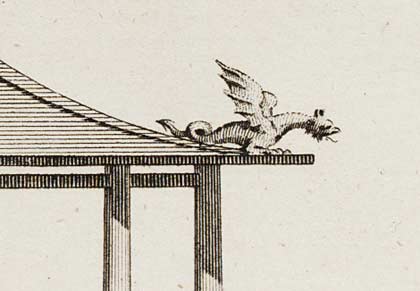
Whilst New York tackles the Lowline project, Austin-Smith:Lord’s conservation architects are currently working on one of the most exciting and important conservation projects within the UK, if not Europe.  It is the restoration of The Great Pagoda at Kew Gardens, in London.

Continue reading “How should we approach conservation? (by David Millar, Austin-Smith:Lord)”