
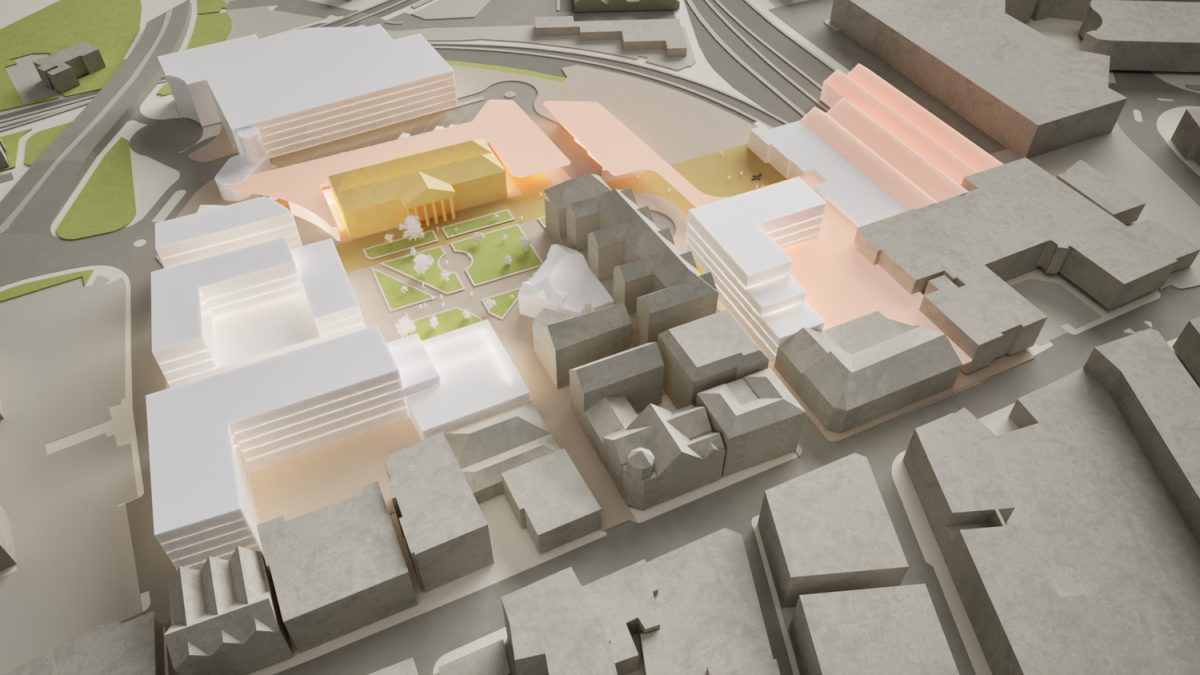
Inverness Interchange: Bringing together transport, placemaking and civic design
Every city centre faces the same challenge: make movement easy, and make staying worthwhile.
In Inverness, that challenge is shaping plans for a new transport hub and civic quarter at the Station Quarter. The project brings together transport, public space and mixed-use development to create a more connected and welcoming city centre.
Austin-Smith:Lord is working with HITRANS, The Highland Council and Network Rail / Scotland’s Railway, alongside SCP and Cameron + Ross Consulting Engineers, to develop the proposals.
Together, the team is designing a place that improves how people arrive, move and spend time in the city.
‘We want to create a place that feels like a natural hub for the city, somewhere that is attractive, convenient and genuinely enjoyable to spend time in,’ says Graham Ross, Chief Executive at Austin-Smith:Lord.
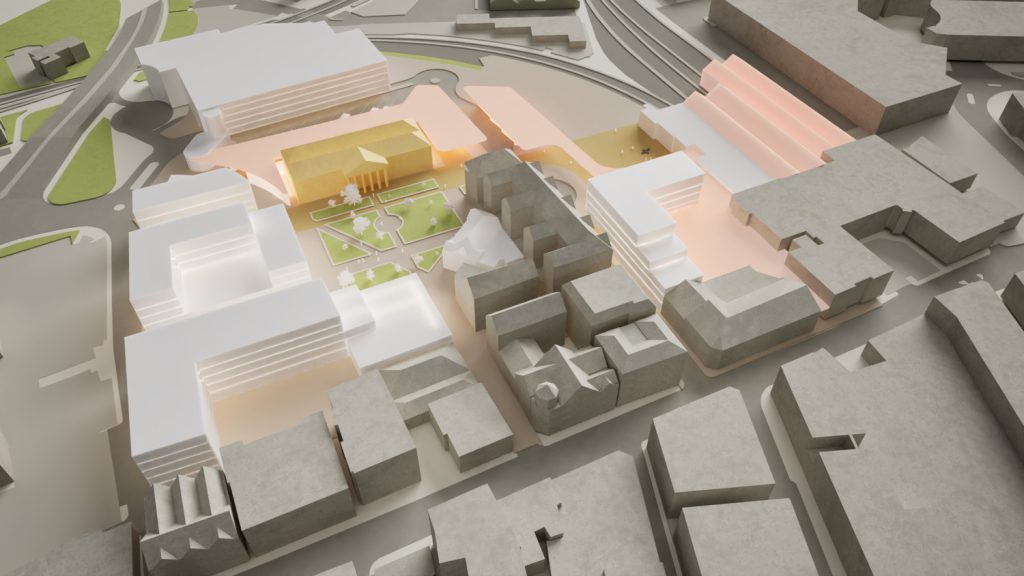
Making travel simpler and more connected
The project focuses on integrating bus and rail into a single, easy-to-use transport hub.
This is not just about infrastructure. It is about reducing friction in everyday journeys.
Many communities across the Highlands rely on a mix of transport modes. Today, those connections can feel disjointed. The new interchange aims to make them clear, direct and reliable.
Better connections will:
- improve access to Inverness city centre
- support public transport use
- reduce reliance on private vehicles
Just as importantly, the design makes movement easier to understand. Routes will feel legible. Spaces will feel safe and intuitive.
‘This is about getting it right for everybody,’ Graham explains. ‘That means thinking carefully about accessibility in the broadest sense, mobility, sensory experience, and how different people use and move through the city.’
The team is designing for a wide range of needs from the outset. That includes people with mobility or sensory impairments, as well as those unfamiliar with the city. The result is a more inclusive and usable place for everyone.
A civic space designed for everyday use
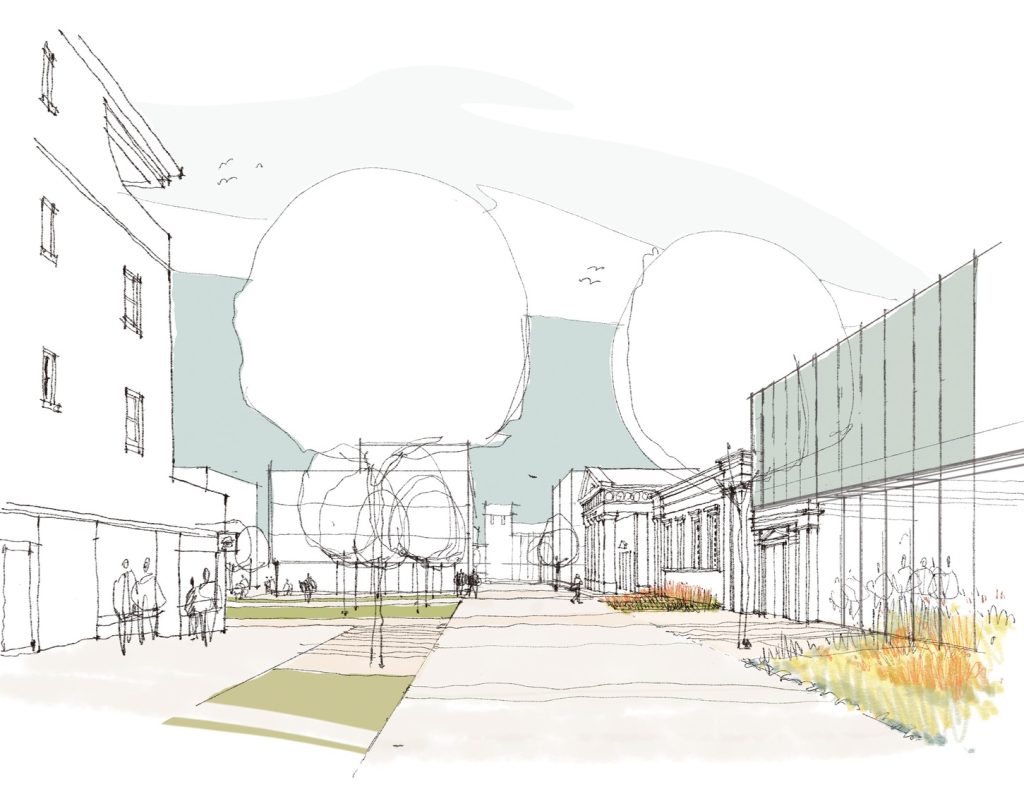
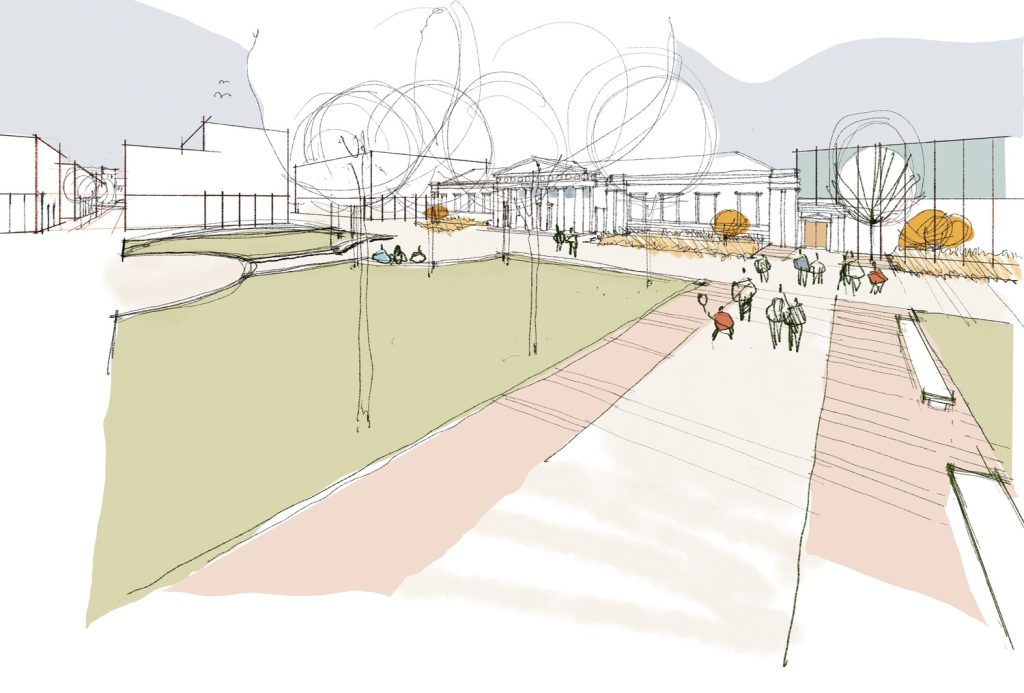
The proposals also include a new civic square at Farraline Park.
This space will act as a front door to Inverness city centre. It will support both everyday use and larger events.
The design keeps the space flexible. It can host markets, seasonal activities and public events. It can also work as a simple place to meet, pause or pass through.
‘There’s an opportunity here to create a space that Inverness doesn’t currently have,’ says Graham. ‘Something that supports everyday use, but can also come to life in different ways throughout the year.’
This flexible approach helps the space stay useful over time. It avoids over-designing for a single purpose.
Shaped by Inverness, not copied from elsewhere
The team has studied strong examples of transport-led regeneration across the UK and Europe. But the design does not copy them.
Instead, it responds directly to Inverness.
The city has a distinct identity. It acts as both a regional centre and a gateway to the Highlands. The design builds on that role.
‘There are great examples out there,’ Graham says, ‘but this isn’t about copying and pasting. It’s about understanding what makes Inverness unique, and building on that.’
This approach ensures the project feels rooted in place. It strengthens what already works, rather than imposing something new.
Taking a circular, long-term approach
The project also supports a more sustainable and resilient future for Inverness.
Better transport integration can reduce car dependency and improve access to the city. At the same time, flexible public spaces can adapt as needs change.
This reflects Austin-Smith:Lord’s commitment to taking a circular stand.
The team is designing for long-term value. That means:
- making better use of existing infrastructure
- creating adaptable spaces that last longer
- supporting low-carbon travel choices
Instead of asking only what the city needs today, the design considers how it will perform over time.
Shaping the future of the Station Quarter
The wider Station Quarter will include a mix of uses. These may include homes, cultural and civic spaces, and commercial activity.
The exact mix is still being defined through consultation.
‘We don’t have a fixed view of exactly what it needs to be,’ says Graham. ‘The important thing is understanding what the city needs more of, and allowing that to shape the outcome.’
This open approach keeps the project responsive. It allows the design to evolve with the needs of the city.
A more connected and inclusive city centre
The Inverness Station Quarter is more than a transport project.
It is an opportunity to create a city centre that works better for people. A place that is easier to reach, easier to move through, and more enjoyable to spend time in.
By bringing together transport, placemaking and civic design, the project aims to support everyday life while building long-term value for the city and its communities.

