
Six Awards, Two Emerging Designers and a Shared Vision for the Future
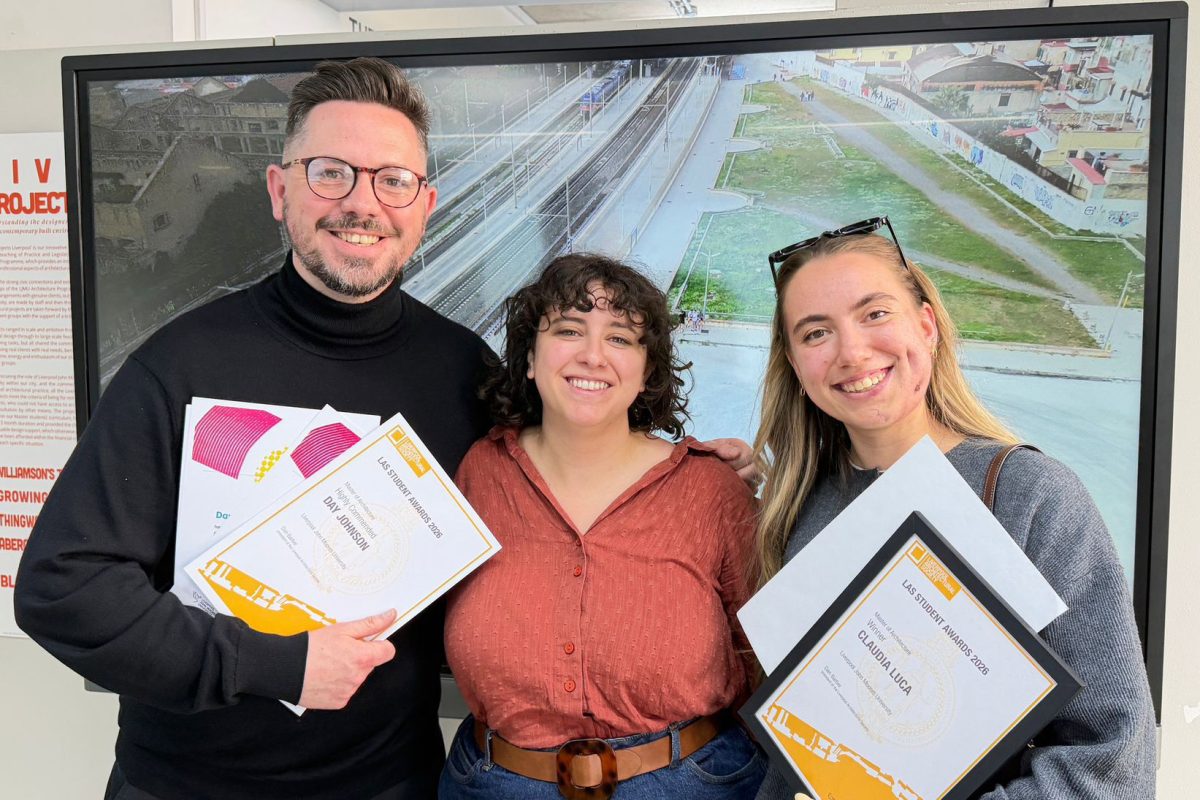
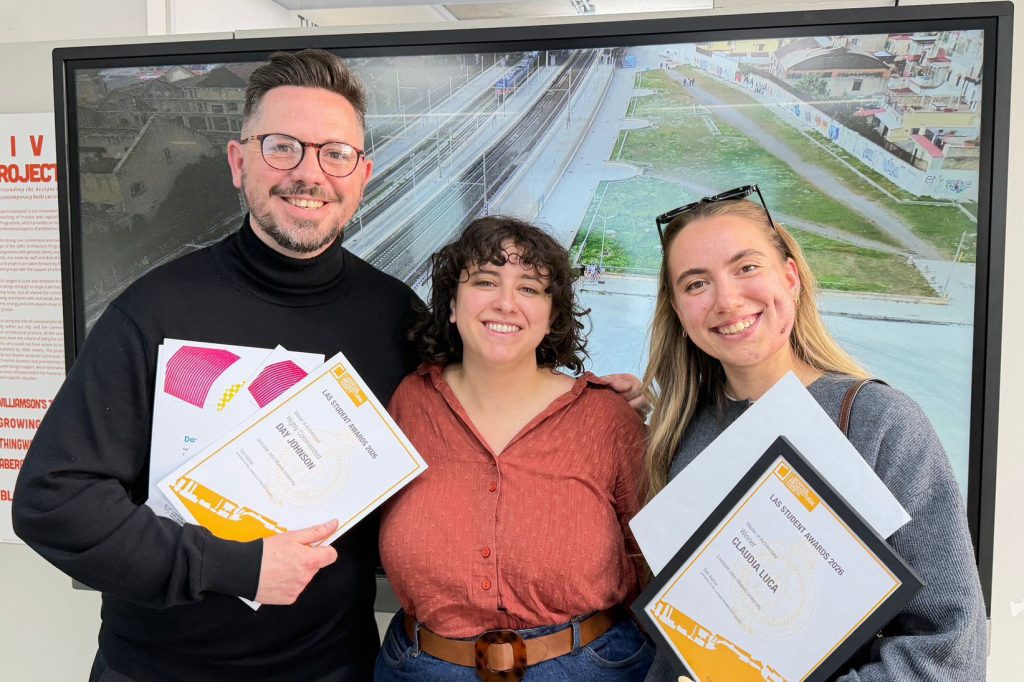
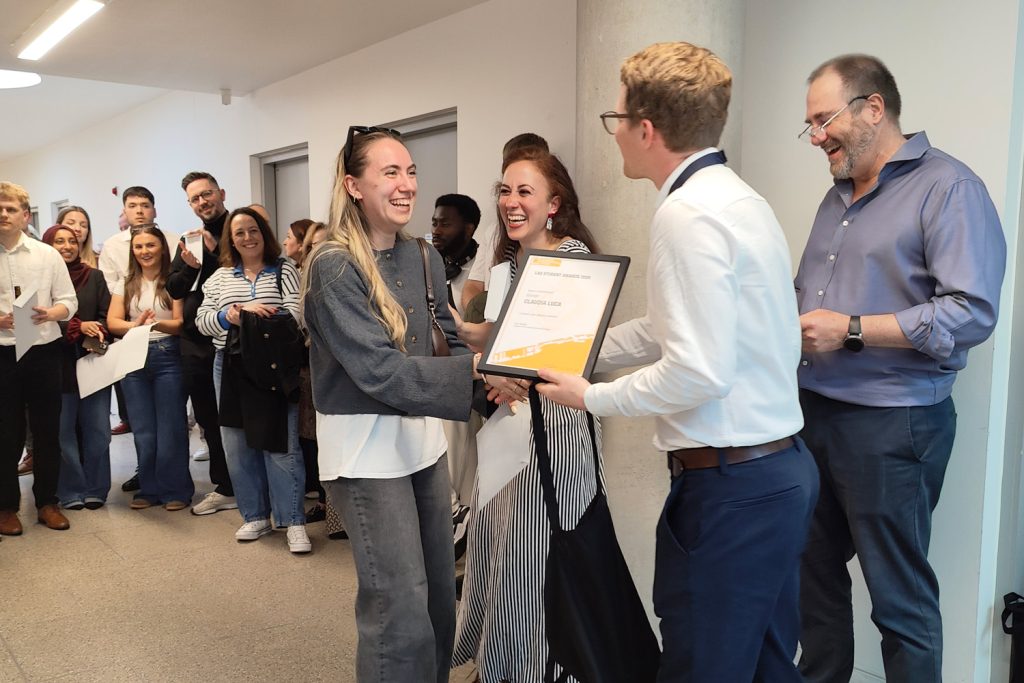
Six awards between two architecture graduates is a remarkable achievement.
For Day Johnson and Claudia Luca, the recognition they received at this year’s degree show for the MArch at Liverpool John Moores University, while feeling ‘surreal’, represents more than a successful final project. It reflects years of curiosity, hard work and a growing confidence in the kind of designers they want to become.
Both have recently joined Austin-Smith:Lord full-time after balancing their studies with roles in the practice. Both are fascinated by the way design can improve people’s lives. And both are already exploring many of the questions that will shape the future of the built environment.
For Day, those questions revolve around civic life, culture and the importance of spaces that bring people together.
‘I like third spaces, and there seems to be a lack of those,’ he says. ‘Places for people to actually do things that you don’t necessarily have to pay for, that enrich their lives.’
For Claudia, the focus is accessibility, inclusion and ensuring that buildings work for the widest possible range of people.
‘I’ve always been interested in how architecture shapes a person and how it shapes their thinking around a building,’ she explains.
Those interests were reflected in the projects that earned recognition at the degree show, but they also mirror many of the values that underpin the work we do every day.
Designing for people
Both projects were rooted in community.
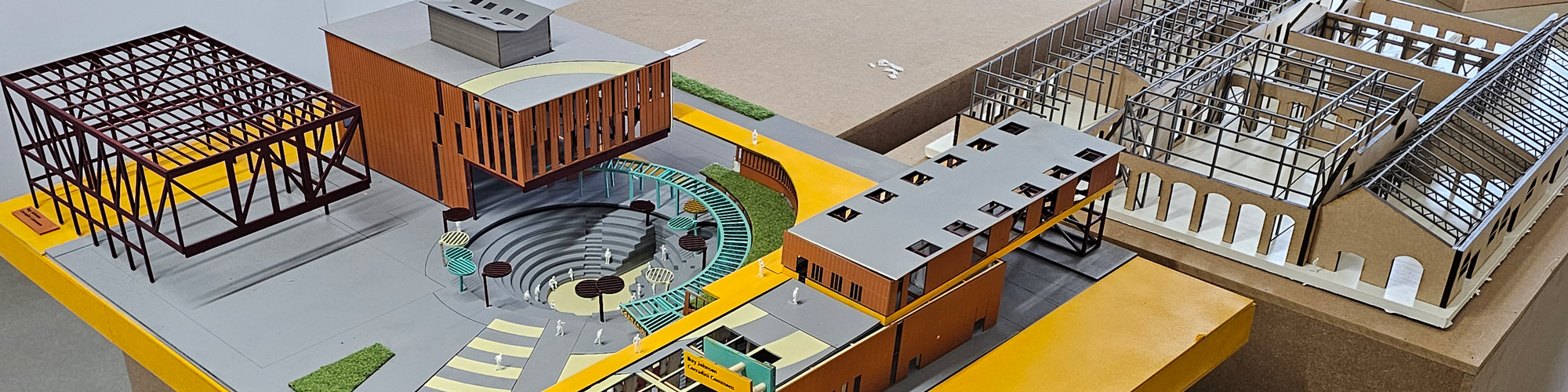
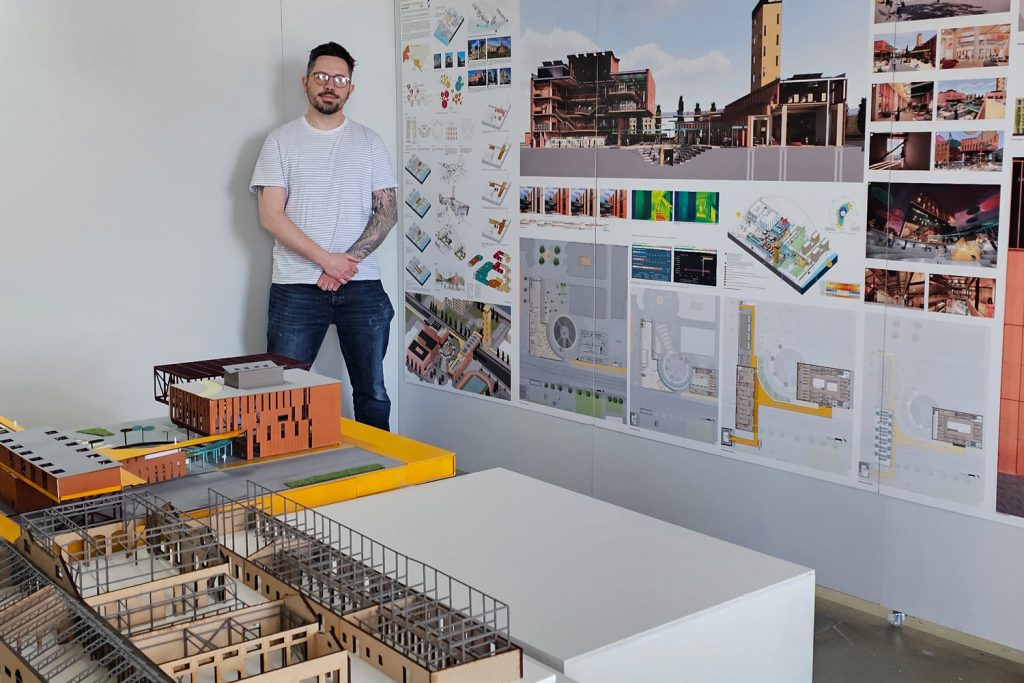
Working from a shared masterplan site in Naples, students were challenged to respond to complex social, economic and environmental issues within a former industrial district.
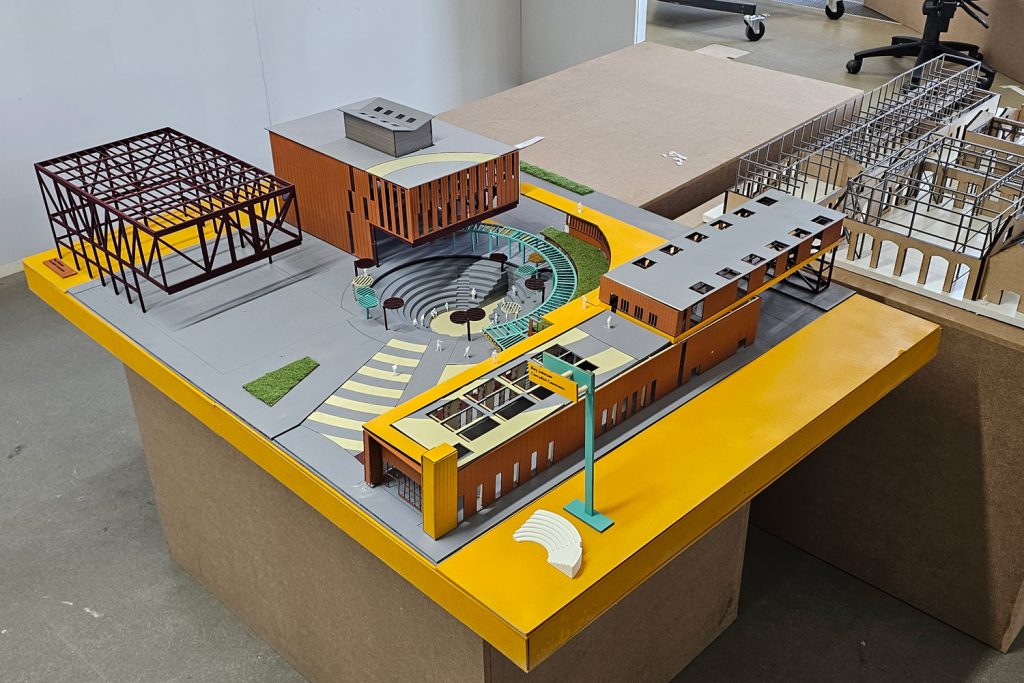
Day’s proposal focused on reconnecting communities that had become separated from the waterfront by existing infrastructure. His civic building brought together food, culture, exhibition space and community decision-making, creating a place where local people could gather, connect and shape their own future.
Claudia’s project explored a different challenge. Responding to issues around unemployment, social isolation and access to education, she developed a community learning hub within an existing building. The proposal combined lifelong learning opportunities with childcare facilities, helping remove barriers that often prevent people from accessing education and employment.
Accessibility and inclusion were central to the scheme.
‘In fact, accessible and inclusive design was my whole thing in university,’ Claudia says.
Her ambition is not simply to meet minimum standards, but to create places where everyone feels welcome and able to participate fully.
The themes may be different, but both projects share a common thread. They begin with people and work backwards from there.
Learning through practice
Alongside their studies, both Day and Claudia spent the past two years working within A-S:L in our Liverpool studio.
The arrangement was not simply about gaining work experience. It created an opportunity to test ideas, develop practical skills and understand how buildings move from concept to reality.
For Day, the experience strengthened and expanded his thinking.
‘The team have been really collaborative throughout, insightful and sustainability-minded,’ he says. ‘It’s reinforced some of my thinking and expanded some of my thinking.’
Claudia points to the trust placed in junior team members as one of the most valuable aspects of her experience.
‘As a Part 1, you can get overlooked sometimes in terms of what skills you can provide,’ she says. ‘We’ve been quite lucky to get asked questions as well.’
That willingness to involve emerging designers in meaningful conversations has helped both graduates develop quickly. Working on live projects exposed them to technical detailing, procurement, construction and client relationships in a way that university alone cannot replicate.
At the same time, they brought fresh perspectives and new ideas into the practice.
‘The team always encouraged us: If you think there’s a better way of doing it, or if you have ideas or suggestions, just come to the table and say it,’ says Claudia.
That culture of openness and knowledge-sharing is something both graduates highlight repeatedly.
‘I think there’s significantly less ego than I’ve seen elsewhere,’ adds Day.
Perhaps the strongest endorsement came when reflecting on the practice’s values and culture.
‘It’s proof that the ethos is actually the ethos.’
A profession shaped by those who share
Neither Day nor Claudia discovered A-S:L through a recruitment campaign.
Instead, both encountered the practice through its longstanding involvement with architectural education.
For years, members of the A-S:L team have contributed to university reviews, guest lectures and professional development activities, sharing knowledge and helping students navigate the transition into practice – not just in Liverpool, but across all our studios.
For Day, the connection runs even deeper. Growing up in Liverpool, he was already familiar with many of the practice’s projects, including civic and cultural buildings that have become part of the city’s everyday fabric.
Claudia first came to know the practice through design reviews and feedback sessions.
Reflecting on Rhiannon Davies‘s involvement in the course, she describes someone who could challenge ideas while remaining encouraging and supportive.
‘She had a calm presence to her,’ Claudia says. ‘She’s a good ambassador for the profession and for the practice.’
That relationship between education and practice matters. Not simply because it helps attract future talent, but because it helps strengthen the profession as a whole.
The commitment to sharing knowledge is something both graduates are already carrying forward themselves. Claudia has recently been invited back to her former school and college to speak about her journey into architecture and encourage future students considering careers in the built environment.
‘I asked Rhiannon if it would be OK, and she said, if you want to do it, go for it,’ she says.
Looking ahead
Now beginning the next chapter of their careers at A-S:L, both graduates are excited about what comes next.
For Claudia, that may include developing specialist expertise in inclusive and accessible design. For Day, it means continuing to explore civic, cultural and community-focused projects that create opportunities for people to connect.
Both are equally excited to be challenged by completely new projects, and see projects they’ve already contributed to become reality.
Having worked on the St Helens Interchange project during their time in practice, they are looking forward to experiencing something every architect remembers: seeing a building move from drawings to construction and finally into use.
‘I’ll actually be able to touch it,’ Claudia laughs.
It is a simple statement, but one that captures an important moment in any designer’s journey.
For all their six awards, neither Day nor Claudia talks much about trophies.
Instead, they talk about people. Communities. Accessibility. Learning. Culture. Opportunity.
They talk about architecture as a way of making life better.
That is precisely why we are delighted to celebrate their success.
Not simply because of what they have achieved so far, but because of the thoughtful, ambitious and socially-minded designers they are becoming.
The future of the built environment will be shaped by people willing to ask difficult questions, challenge assumptions and keep learning.
Judging by their work so far, that future is in good hands.

