Well 2026: Beyond Metrics
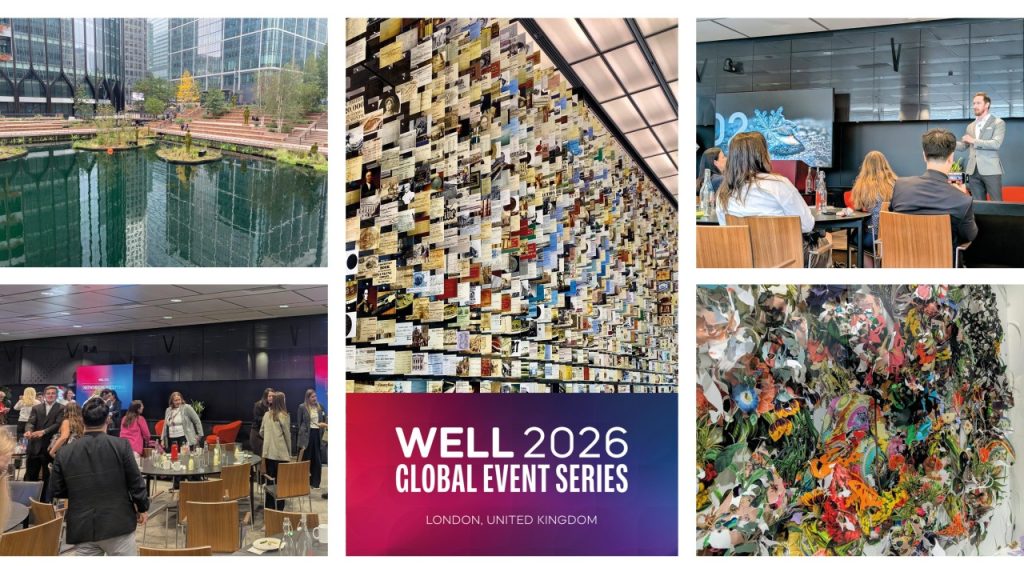
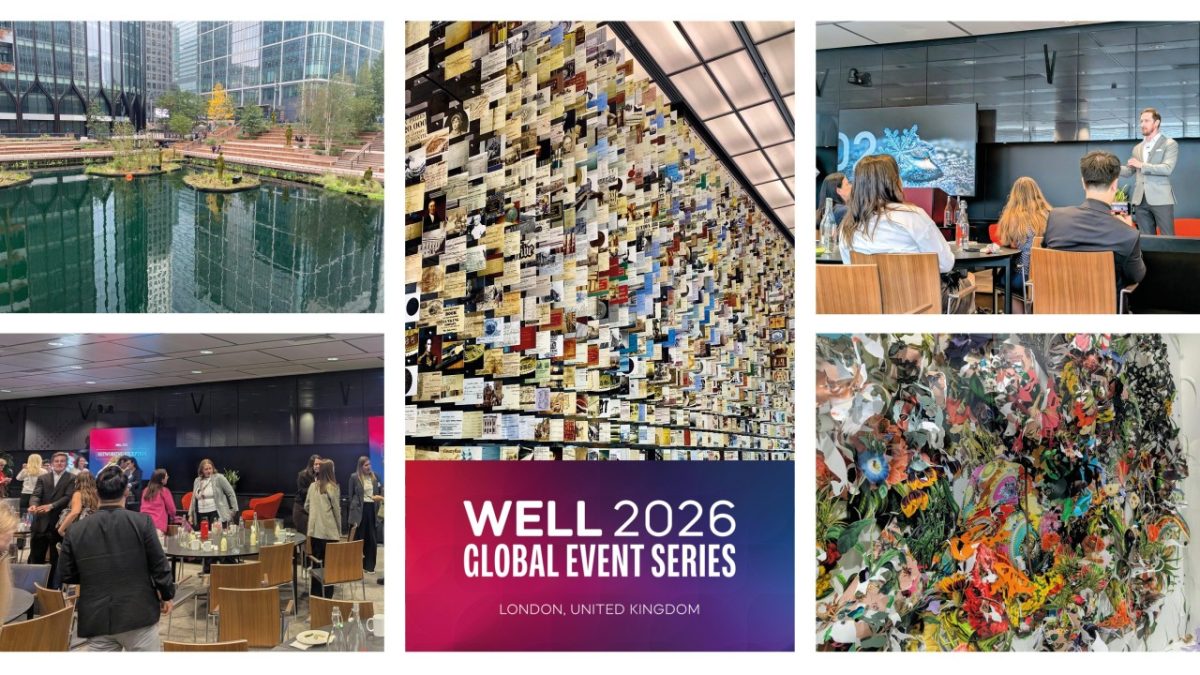
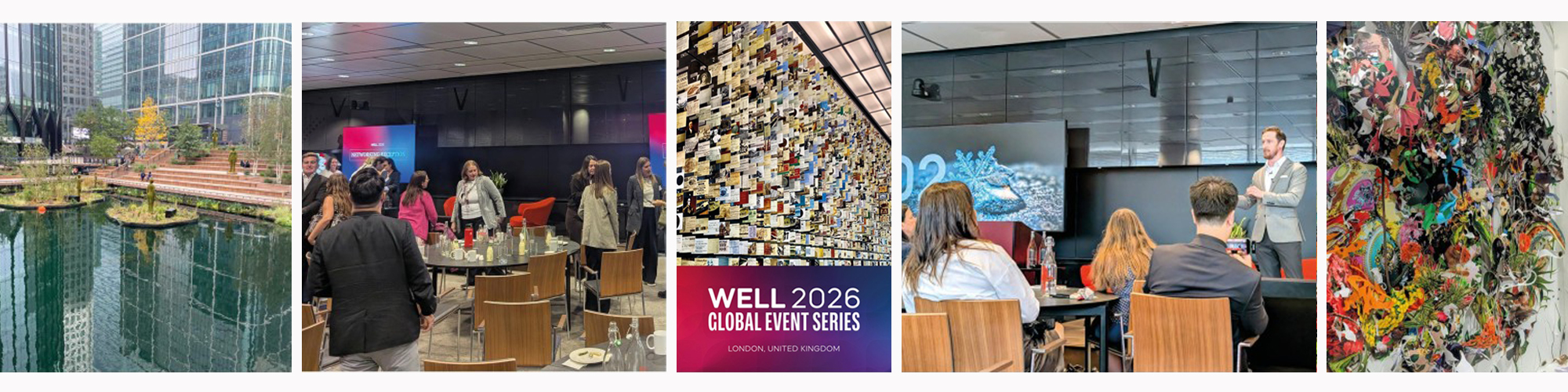
I left the WELL 2026 London Summit feeling both optimistic and frustrated.
Optimistic because there is no doubt that health and wellbeing have moved from the margins of sustainability conversations towards the centre. Frustrated because, despite a day dedicated to wellbeing, I found myself repeatedly asking whether the people who need these conversations most are represented in the room.
That tension sat behind many of the talks and discussions throughout the day.
One of the themes that surfaced repeatedly was storytelling. For years sustainability has largely been communicated through performance metrics. Carbon. Energy. Water. Waste. These are important and measurable, but they are also abstract. Human wellbeing is different. We instinctively understand what it means to feel comfortable, safe, connected, inspired or joyful. Storytelling gives us a language for those experiences.
Perhaps this is why wellbeing feels like the next, or current, frontier of sustainability.
The observation was made that “the planet will be fine; it is life that is affected.” While deliberately provocative, there is truth in it. Sustainability has traditionally focused on planetary health, whilst growing conversations around material health, indoor environmental quality and wellbeing bring human health into sharper focus. The reality, of course, is that these are not separate conversations. What is healthy for the planet is healthy for people, and vice versa.
This is why one of the most encouraging aspects of the day was seeing a case study where WELL and Passivhaus were being pursued together, in a higher education setting no less. These standards are often discussed independently, but it is a forward-thinking developer that recognises the overlap. Energy-efficient buildings that support health and comfort should not be seen as exceptional. They should be the baseline we are working towards.
The announcement of the WELL Interiors pilot was another positive development. As a WELL AP and Architect, I have put myself forward to join the working group. The prospect of helping shape a framework aimed more directly at architects and designers is genuinely exciting. There is real potential to create guidance focused on the physical environment and the decisions design teams can meaningfully influence.
Yet this enthusiasm kept colliding with a question that, for me, went largely unanswered throughout the day.
Who gets access to wellbeing? Not theoretically. Actually.
The question feels particularly relevant from my own perspective. Although I’ve maintained WELL AP status for nearly six years, I’ve never worked on a WELL-certified project.
That isn’t because wellbeing has been absent from my, or the practices, work. Quite the opposite. Across our portfolio wellbeing considerations regularly inform design decisions. Daylight, air quality, active travel, access to nature, social connection, inclusivity, material choices, and comfort are already part of the conversation. The principles are often there as an intrinsic part of our work.
That distinction feels important because it suggests the problem is not knowledge. We already know how to design healthier environments, and many clients already understand their value. The challenge is implementation; creating the conditions that allow wellbeing ambitions to survive procurement.
As a practice we work a lot on publicly funded projects. Education, housing, community and civic projects. The places where wellbeing arguably matters most.
Many clients understand the principles and want to pursue them. The problem is that, without a mandate, funding requirement or certification target, wellbeing measures are often among the first casualties of value engineering. The aspiration remains, but the mechanism for protecting it disappears.
This is why I increasingly wonder whether WELL’s greatest challenge is no longer proving its value; the evidence base is strong, the challenge now is accessibility. How do we bring the benefits of evidence-led wellbeing frameworks to projects that don’t generate obvious financial returns?
Schools. Homes. Community buildings.
At times I found myself questioning whether we were really talking about wellbeing, or simply finding new ways to talk about value. For all the discussion around human-centred spaces, the conversation repeatedly gravitated back to productivity, profitability and return on investment. Whilst those arguments undoubtedly help drive change, they can also feel strangely at odds with the idea that human health, happiness and dignity are valuable in and of themselves. If wellbeing only matters when it improves the bottom line, are we truly putting people first?
Healthy and happy people are good for the economy. We know this. But healthy and happy people are also, just…good.
The final session of the day featured the head of Heatherwick Studio’s Humanise campaign. It was the first time all day that I felt my own values as a designer reflected in the conversation. After hours of discussion around statistics here was a discussion about something much more fundamental: creating places that people genuinely enjoy being in. I stopped thinking as a WELL AP and started nodding along as an architect.
The campaign’s central message is disarmingly simple: our everyday buildings should work harder to create joy.
I couldn’t help noticing the irony that one of the most compelling arguments for improving everyday buildings came from a practice that rarely works on everyday buildings or with everyday budgets. But perhaps that is precisely why the message landed. It exposed the gap between our aspirations and our reality. We know how to create places people find joy in; the challenge is bringing those qualities to the projects that make up most of the built environment, not just the exceptional few.
Too often we treat beauty, delight and wellbeing as luxuries to be added when budgets allow, rather than necessities that shape everyday experience. Yet schools, housing and healthcare settings arguably have more to gain from these qualities than many of the flagship commercial projects that dominate industry conversations.
I think that is the conversation I wanted more of throughout the day.
For all the discussion around productivity and performance, joy cannot be measured and so how can we prioritise it. Yet joy is often the reason many of us entered the profession in the first place.
The joy of a well-lit room, of colour, of feeling welcome, of belonging.
The joy of beauty, and of function.
The joy of everyday life being made slightly better through design.
If wellbeing standards are to become truly transformative, that is where I think the conversation ultimately needs to land. Not abandoning evidence but remembering why the evidence matters.
There is no shortage of guidance on designing for health and wellbeing. What WELL provides better than almost any other framework is a structured, evidence-led method for embedding those ambitions into projects and protecting them through delivery.
The question now is how we extend those benefits beyond organisations that can readily afford certification.
Because the future of wellbeing should not be measured by how many premium workplaces achieve a plaque on the wall.
It should be measured by how many people encounter healthier, happier and more joyful buildings during an entirely ordinary day.
And that feels like a challenge worth solving.