
April is World Landscape Architecture Month!
By Siobhan Vernon, Head of Landscape Architecture
World Landscape Architecture Month is a chance to reflect on the role landscape architects play in shaping healthier, greener and more resilient places.
At its core, landscape architecture is about thoughtfully arranging natural and built elements to create environments that people inhabit and experience every day. It influences how we move, connect, rest, play and belong.
Landscape architecture creates a stage set for life
There’s a powerful connection between landscape architecture, filmmaking and storytelling. While landscape architects design physical spaces, filmmakers craft visual worlds that audiences emotionally occupy. In both, space is never neutral; it directs movement, evokes feeling and shapes a narrative.
Importantly, both disciplines focus on human experience, considering how people perceive, navigate and respond emotionally to their surroundings.
Interestingly, many fictional, cinematic worlds are built around principles landscape architects advocate for every day: walkability, green infrastructure, intuitive movement and people-first public space.
Sometimes, the worlds we imagine on screen reveal what we value most in the real one. Take family-friendly films like Matilda (1996) and Paddington (2014). These stories depict softened versions of everyday urban and suburban life: calm streets, minimal and courteous traffic, and neighbourhoods where homes, schools and amenities feel easily accessible. They imagine places that prioritise people over vehicles and make active travel feel natural.
In Winnie-the-Pooh, the Hundred Acre Wood offers almost barrier-free movement, playful navigation and natural landmarks woven into the landscape. It feels intuitive, connected and deeply rooted in nature, much like the green infrastructure and biodiversity-led environments landscape architects strive to create.
And in Zootropolis (2016), the city is designed to accommodate animals of vastly different shapes and sizes, offering full mobility to a wide range of needs. With hyper-efficient mass transit, adaptable infrastructure and spaces designed for social interaction, it presents a vision of inclusive, integrated urban design.

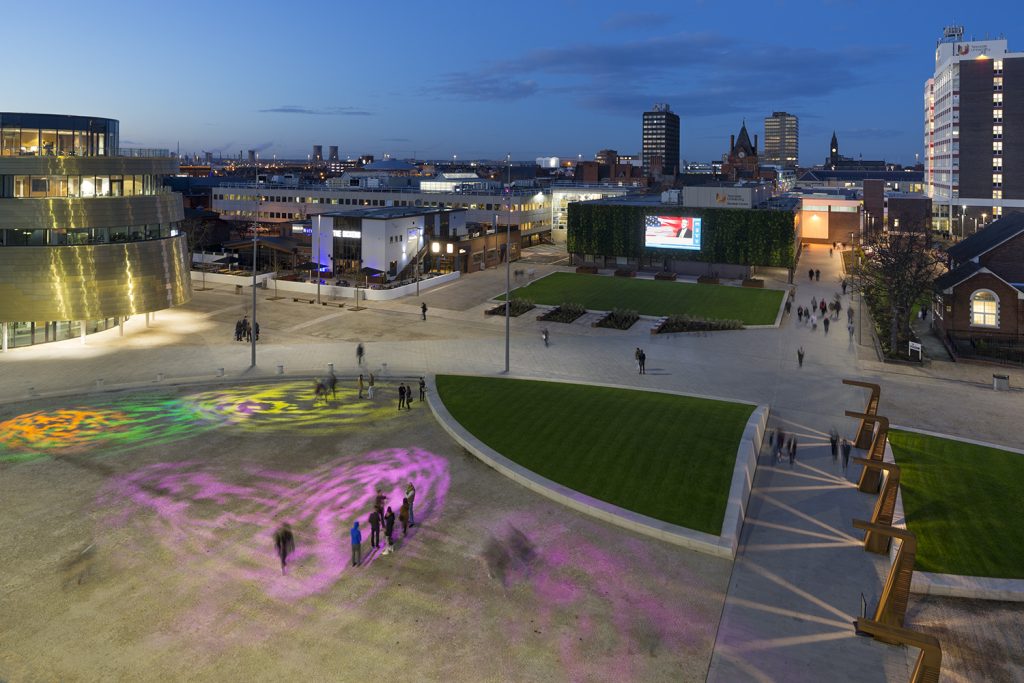
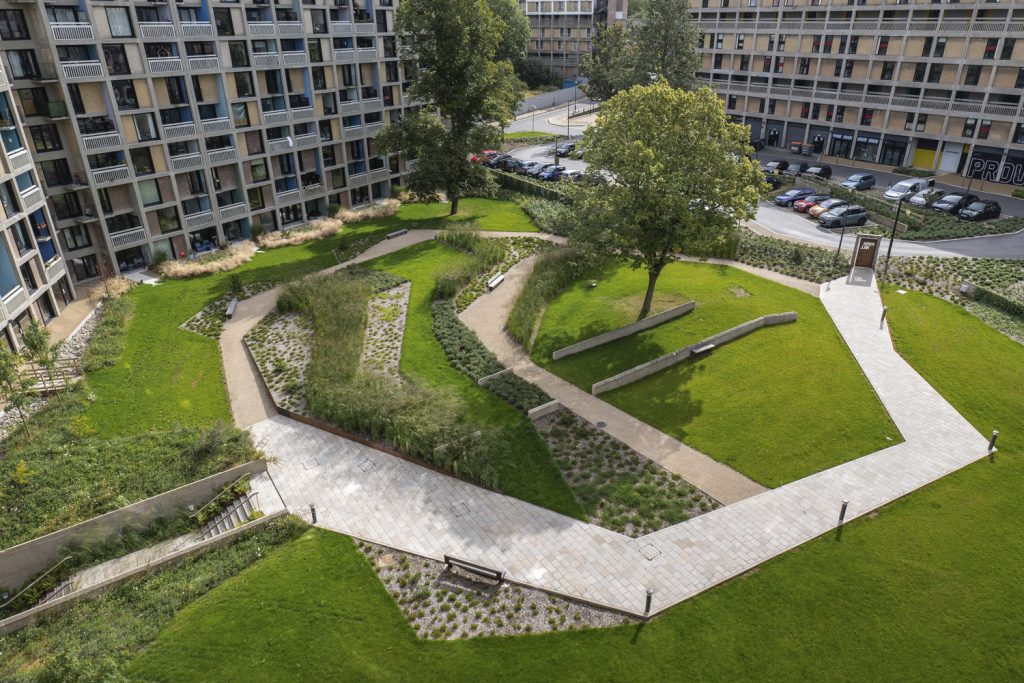
Where imagination meets placemaking
These cinematic environments often reflect ideas that matter deeply in real-world placemaking:
- Walkable environments
- Playable cities
- Shared or car-free spaces
- Green infrastructure and biodiversity
- Intuitive, accessible circulation
- Continuous, free-flowing spaces
- Integrated public transport
- Long-term resilience and adaptability
These imagined places convey freedom, imagination, belonging and autonomy. They allow inhabitants to navigate spaces independently and confidently, which are qualities many adults would welcome in public space too.
They also prioritise what many real places need more of: less reliance on cars, more room for nature, better public transport and spaces designed with long-term resilience in mind.
At Austin-Smith:Lord, we believe landscape architecture has the power to create places that are not only beautiful, but resource-wise, resilient and built for future generations.
Because the best places, whether imagined or real, are designed for life – for people, place and planet.
Which cinematic world do you think gets it right?

