April is World Landscape Architecture Month!

world landscape architecture month

April is World Landscape Architecture Month!

By Siobhan Vernon, Head of Landscape Architecture

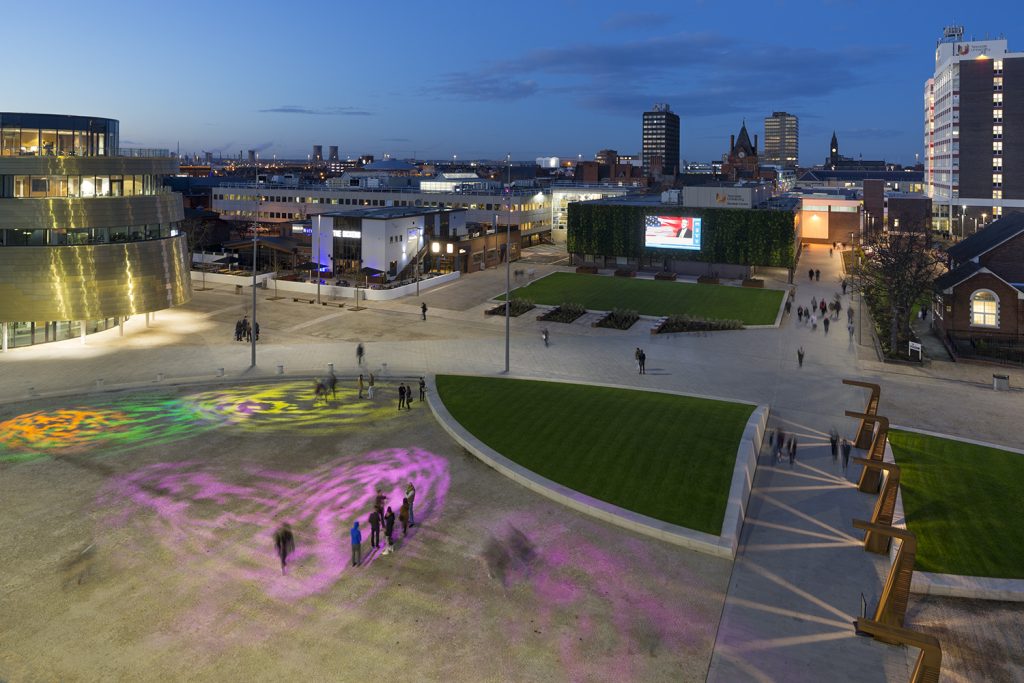
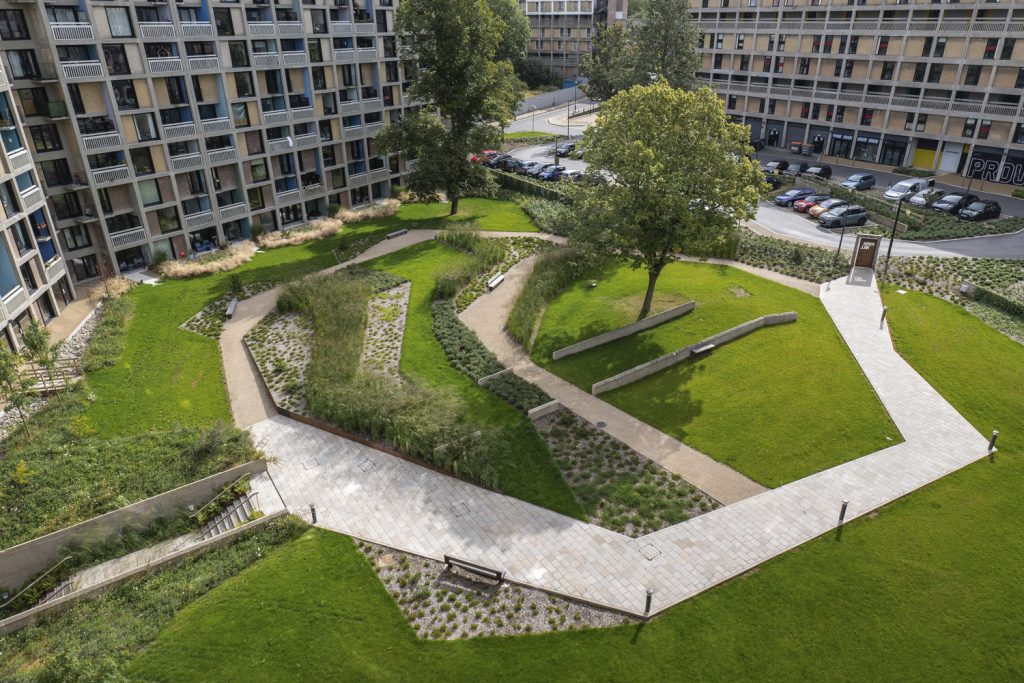
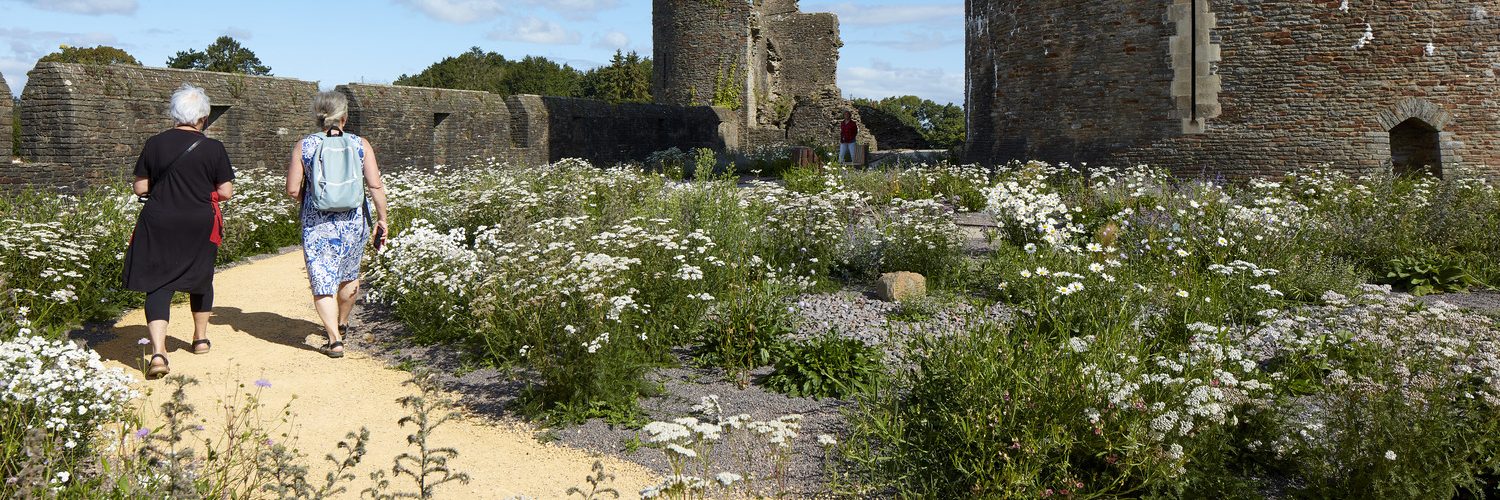
World Landscape Architecture Month is a chance to reflect on the role landscape architects play in shaping healthier, greener and more resilient places.

At its core, landscape architecture is about thoughtfully arranging natural and built elements to create environments that people inhabit and experience every day. It influences how we move, connect, rest, play and belong.
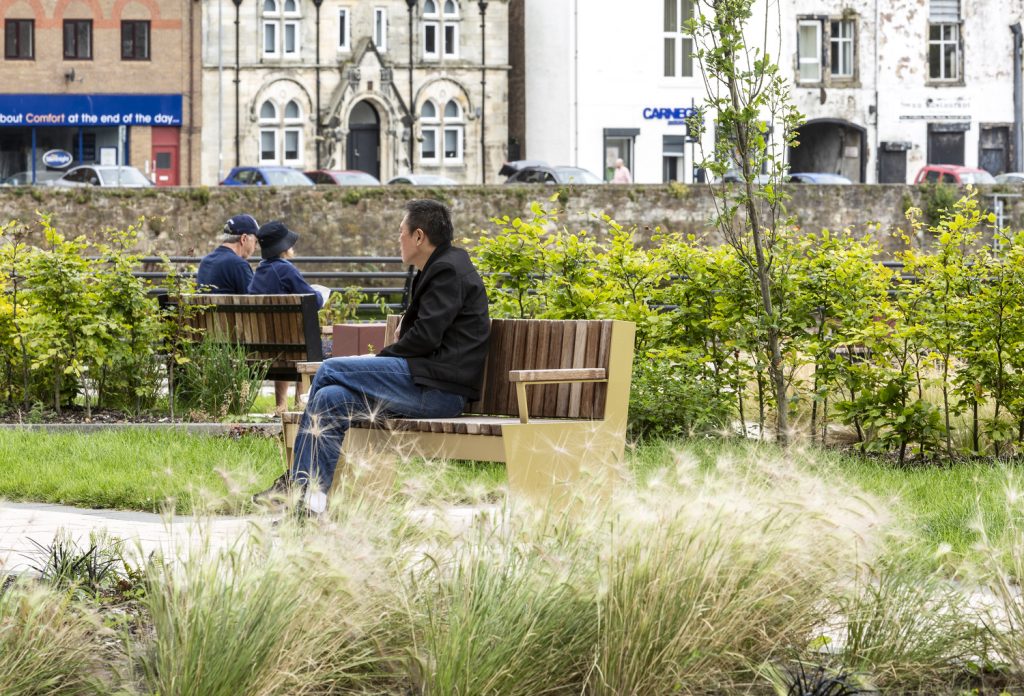
 

Landscape architecture creates a stage set for life

There’s a powerful connection between landscape architecture, filmmaking and storytelling. While landscape architects design physical spaces, filmmakers craft visual worlds that audiences emotionally occupy. In both, space is never neutral; it directs movement, evokes feeling and shapes a narrative.

Importantly, both disciplines focus on human experience, considering how people perceive, navigate and respond emotionally to their surroundings.

Interestingly, many fictional, cinematic worlds are built around principles landscape architects advocate for every day: walkability, green infrastructure, intuitive movement and people-first public space.

Sometimes, the worlds we imagine on screen reveal what we value most in the real one. Take family-friendly films like Matilda (1996) and Paddington (2014). These stories depict softened versions of everyday urban and suburban life: calm streets, minimal and courteous traffic, and neighbourhoods where homes, schools and amenities feel easily accessible. They imagine places that prioritise people over vehicles and make active travel feel natural.

In Winnie-the-Pooh, the Hundred Acre Wood offers almost barrier-free movement, playful navigation and natural landmarks woven into the landscape. It feels intuitive, connected and deeply rooted in nature, much like the green infrastructure and biodiversity-led environments landscape architects strive to create.

And in Zootropolis (2016), the city is designed to accommodate animals of vastly different shapes and sizes, offering full mobility to a wide range of needs. With hyper-efficient mass transit, adaptable infrastructure and spaces designed for social interaction, it presents a vision of inclusive, integrated urban design.
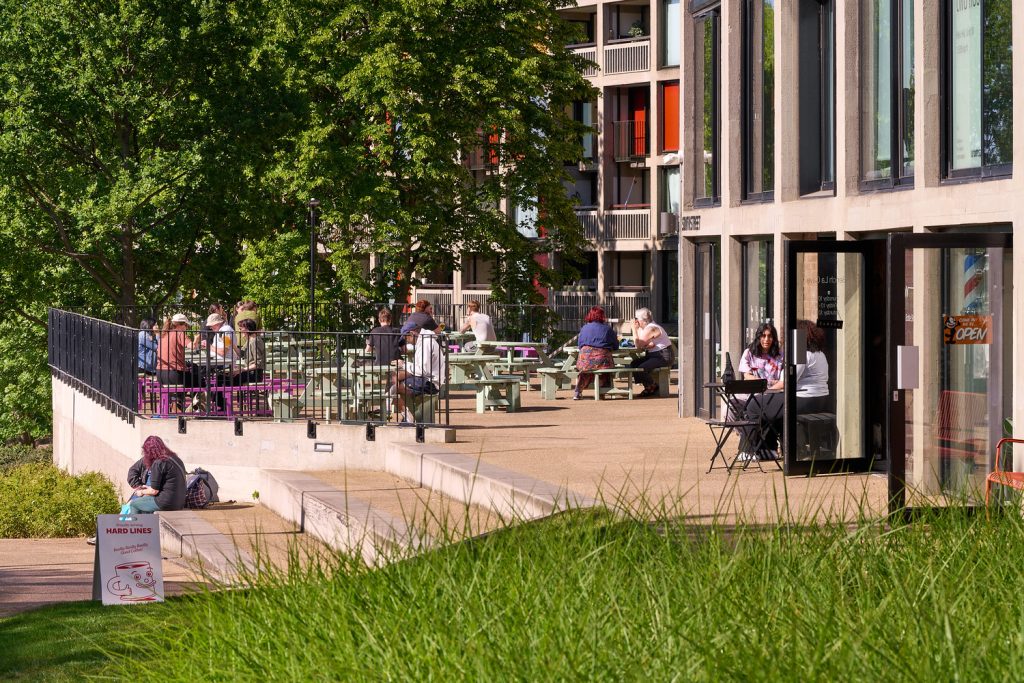

 

Where imagination meets placemaking

These cinematic environments often reflect ideas that matter deeply in real-world placemaking:

  • Walkable environments
  • Playable cities
  • Shared or car-free spaces
  • Green infrastructure and biodiversity
  • Intuitive, accessible circulation
  • Continuous, free-flowing spaces
  • Integrated public transport
  • Long-term resilience and adaptability

These imagined places convey freedom, imagination, belonging and autonomy. They allow inhabitants to navigate spaces independently and confidently, which are qualities many adults would welcome in public space too.

They also prioritise what many real places need more of: less reliance on cars, more room for nature, better public transport and spaces designed with long-term resilience in mind.

At Austin-Smith:Lord, we believe landscape architecture has the power to create places that are not only beautiful, but resource-wise, resilient and built for future generations.

Because the best places, whether imagined or real, are designed for life – for people, place and planet.

Which cinematic world do you think gets it right?
Designing for the Long View: Catherine Cosgrove on Sustainability, Conservation and the Power of Quiet Decisions

Designing for the Long View: Catherine Cosgrove on Sustainability, Conservation and the Power of Quiet Decisions

Catherine Cosgrove recently celebrated 20 years at Austin-Smith:Lord. We asked her how the built environment had changed in that time, and what continues to excite her about her work.


Growing up with making

Catherine Cosgrove grew up on a building site.

‘My mum and dad were doing a managed self-build. My toys were a small wheelbarrow and a spade’.

Construction was normal in her family. But what stayed with her was not just the building itself. It was the act of making. Drawing. Working something out from first principles.

‘At school, technical drawing was my calm time. You start with a blank bit of paper and you finish with something real. I remember thinking: I wish you could do this as a job. And then thinking, well yes, maybe I could’.

Twenty years into her career at Austin-Smith:Lord, that instinct to make things thoughtfully and responsibly still drives her work.

Where sustainability meets conservation

Catherine joined A-S:L with a clear intention. ‘I came specifically to do sustainability at A-S:L, and I continue to do sustainability at A-S:L. Back then, many practices were only beginning to grapple with it seriously’. Over the years, that focus has deepened into something more nuanced. Today, she works at what she calls ‘the interesting crossover between sustainability and conservation’.

‘If you start looking, there’s always something more to learn … it’s not one thing or the other. It’s everything together’.

The more she learned about environmental performance, materials and detailing, the more she recognised that many answers already existed in historic buildings. And the more conservation projects she undertook, the more she saw sustainability as intrinsic rather than additional.

‘The more you look, the more you learn. Some of the things we’re calling innovative now have actually been done before, and done very well’.

That dual perspective gives her a rare lens. She understands contemporary carbon targets and compliance requirements, but she also understands how buildings behave over centuries.

Clients increasingly seek that blend.

‘We’ve got all these requirements on us, and we’ve got a long-term interest in the building. We want to make sure that our interventions are resilient’.

Resilience, for Catherine, is not a slogan.

‘Design is not 30 years. It’s 60 years, 100 years. The question we need to ask is: What delivers best value for the longest time?’

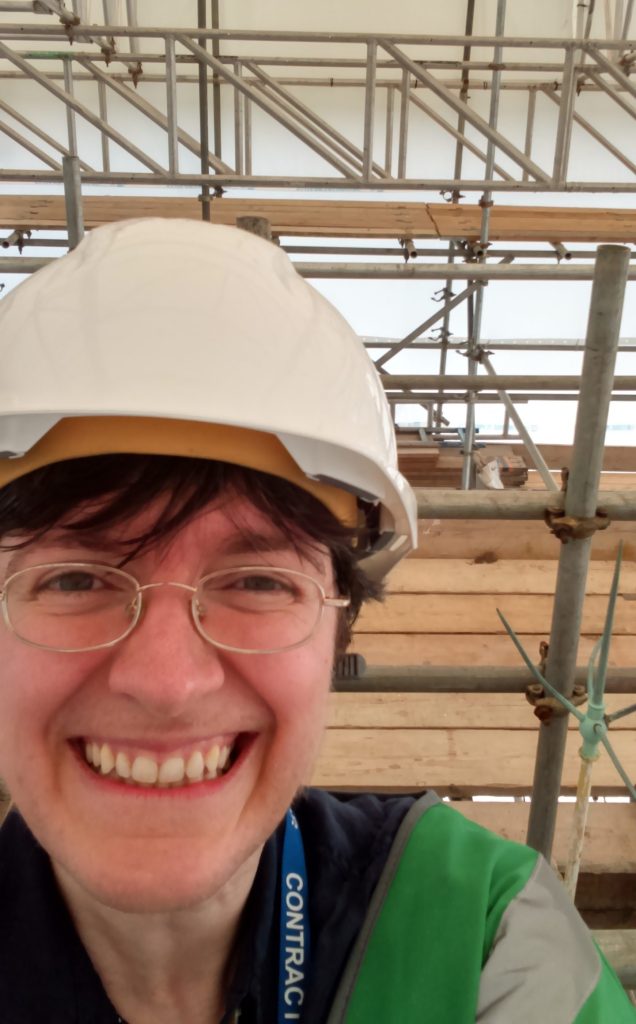
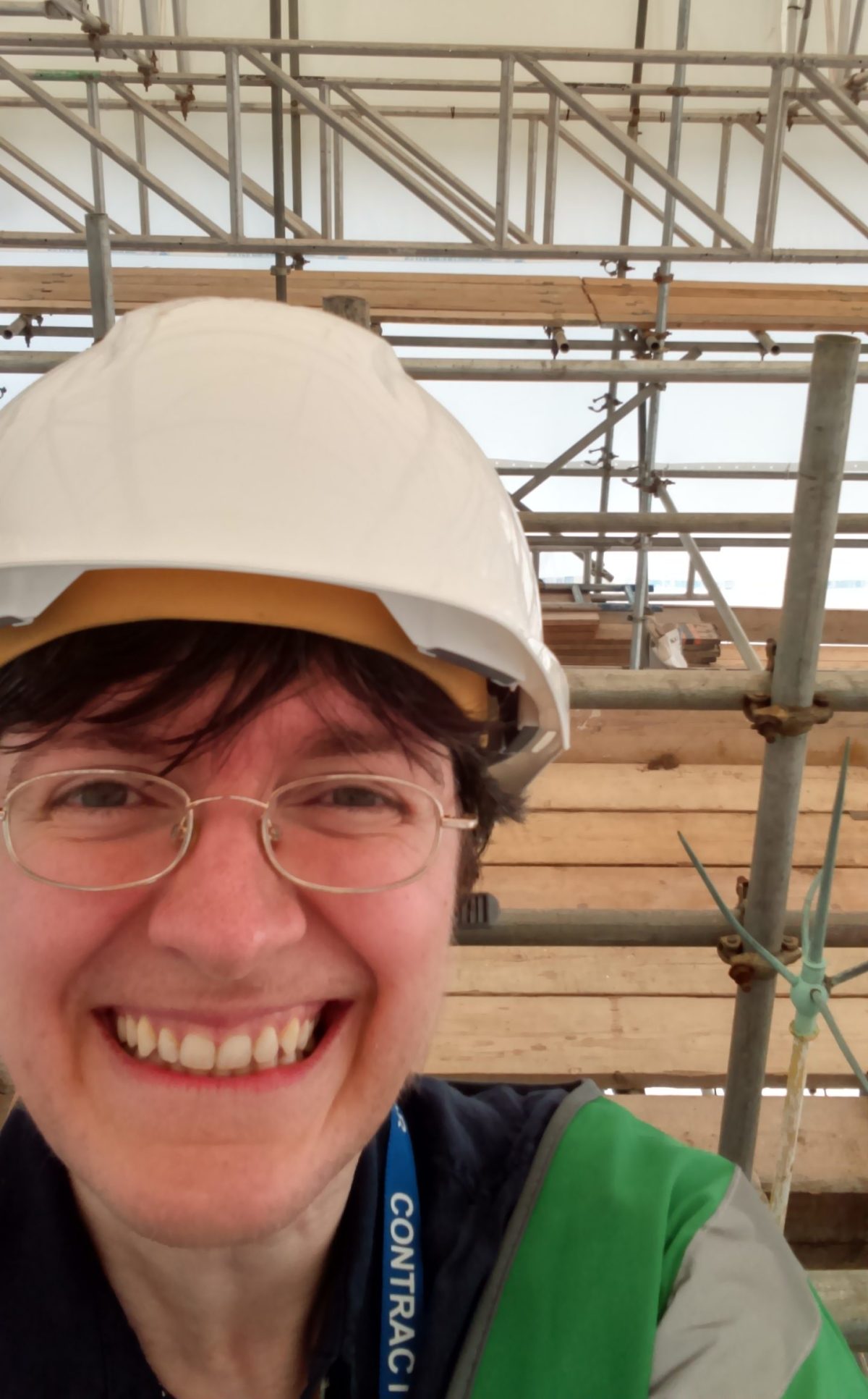
Catherine right at the top of Kew Garden Pagoda during its restoration, delighted to have found the original lightning spike in surprisingly good condition.

Thinking beyond the red line

For Catherine, sustainability is not a layer added at the end of a project. It is a framework that shapes decisions from the outset, including decisions that sit outside the obvious brief.

‘We can do the job. The job is not the problem. But you can have even bigger impact beyond the red line boundary by considering what additional benefits you can bring’.

That might mean social value. It might mean environmental regeneration. It might mean influencing supply chains or reducing unnecessary complexity. Often it means asking questions that were not written into the brief. The building itself is only part of the story – the wider impact matters just as much.

Her early years at A-S:L included a series of education projects with Glasgow City Council, the University of Edinburgh and South Lanarkshire College that progressively raised their sustainability ambitions. Each scheme carried forward lessons from the last. Targets became more demanding. Standards tightened. Clients asked for more.

‘Every time the client set the bar higher, we rose to meet it. It wasn’t such a leap, because we’d built up that experience. You learn. You refine. You get more confident’.

That confidence matters in an industry shaped by cost pressure and short-term decisions.


The thousand quiet decisions

For Catherine, the real impact of architecture often happens quietly.

‘I keep reminding our staff that in every project, they’ll be making thousands of design decisions that nobody but them really cares about or even sees. On maybe ten really big decisions, everyone wants to weigh in. The other 990 nobody hears about’.

Those 990 decisions shape how a building ages, how easily it can be repaired, how comfortable it feels and how resilient it proves to be in extreme weather. They include the width of an overhang, the choice of mortar, the detailing of a threshold.

‘You can make quite a considerable difference just by how you design. And nobody will notice’.

Nobody except the people using the building. Nobody except the facilities manager who can access plant safely.

Nobody except the resident, who can sit at a slightly lowered window and look out at the world. A lesson Catherine remembers from an early housing mentor who believed that good design lives in small human details.

‘The door handle into your front door. That’s the thing you touch every day. These things aren’t in the brief. But they make a practical and emotional difference’.

That care applies whether the project is affordable housing, a school or a heritage landmark.

‘We try and put the same care and attention into every small detail. We design something people like and it becomes well loved’.

And well-loved buildings last.


Raising the bar from within

For Catherine, sustainability is not only about individual projects. It is also about how a practice chooses to operate.

She speaks candidly about the shift from good intentions to formal commitment. Once sustainability becomes embedded in business decisions rather than treated as an optional extra, it changes behaviour across the board.

‘Those “nice to have” things are what set you apart’, she says. ‘As long as it actually means something to you’.

The difference, she explains, is accountability. When standards are reported on, measured and shared, they stop being abstract aspirations and become part of daily decision-making. What once felt ad hoc becomes structured. What once depended on individual enthusiasm becomes embedded culture.

And that culture extends beyond the studio, applying as much to procurement and partnerships as it does to design. Where materials are sourced. How suppliers are selected. Whether conversations about carbon, social value and long-term resilience are happening early enough to shape outcomes rather than justify them.

Catherine has long been involved in industry networks and professional bodies, sharing knowledge and learning from others who are trying to shift their sectors in similar ways. She is clear that meaningful change does not come from isolated action.

‘If we had 20 practices all trying to do social good and environmental good, together that would make a considerable impact’.

The ambition is not to chase trends or badges, but to work with clients and collaborators who genuinely share that intent. When leadership from the client side aligns with design expertise, she believes the impact can be transformative.

‘You will make a difference. You can do things in a different way’.


Professional problem solvers

Architecture, as Catherine sees it, is not an isolated act of creativity but a coordinated process involving engineers, contractors, facilities managers and clients, each with their own priorities.

‘We’re professional problem solvers’.

That mindset includes challenging unnecessary complexity and recognising the value of simplification. Fewer components can mean faster procurement, easier construction and lower maintenance burdens. Sustainability, commercial pragmatism and buildability need not be in tension; often they align.

‘I think our clients get projects that are even more than they expected. We’ve ticked all the boxes they knew they wanted. But we’ve also delivered so much more than that’.

Much of that “more” comes from listening.

‘We do an awful lot of research at the beginning. We do an awful lot of listening. We’re trying to tease out the things that aren’t written down in the brief’.

That early thinking prevents problems later and unlocks opportunities others might miss.

‘It’s not going to cost you more to do it this way. You just need a bit more thinking time at the beginning’.


A vocation, not just a profession

After two decades, the enthusiasm has not faded.

‘The best bit about this job is going out, meeting clients, seeing their buildings, listening to their problems. Sometimes we don’t even need a new building at the end of it’.

Helping people think differently. Solving something well. Leaving a place better than it was.

‘It’s a vocation rather than just a profession. We do it for the love of it’.

In Catherine’s case, that love expresses itself not in spectacle but in care. In judgement. In the thousand quiet decisions that shape buildings for generations.