Diary Date: 24th November 2016 – (Y)our Broomielaw Stakeholder Event

Diary Date: 24th November 2016 - (Y)our Broomielaw Stakeholder Event

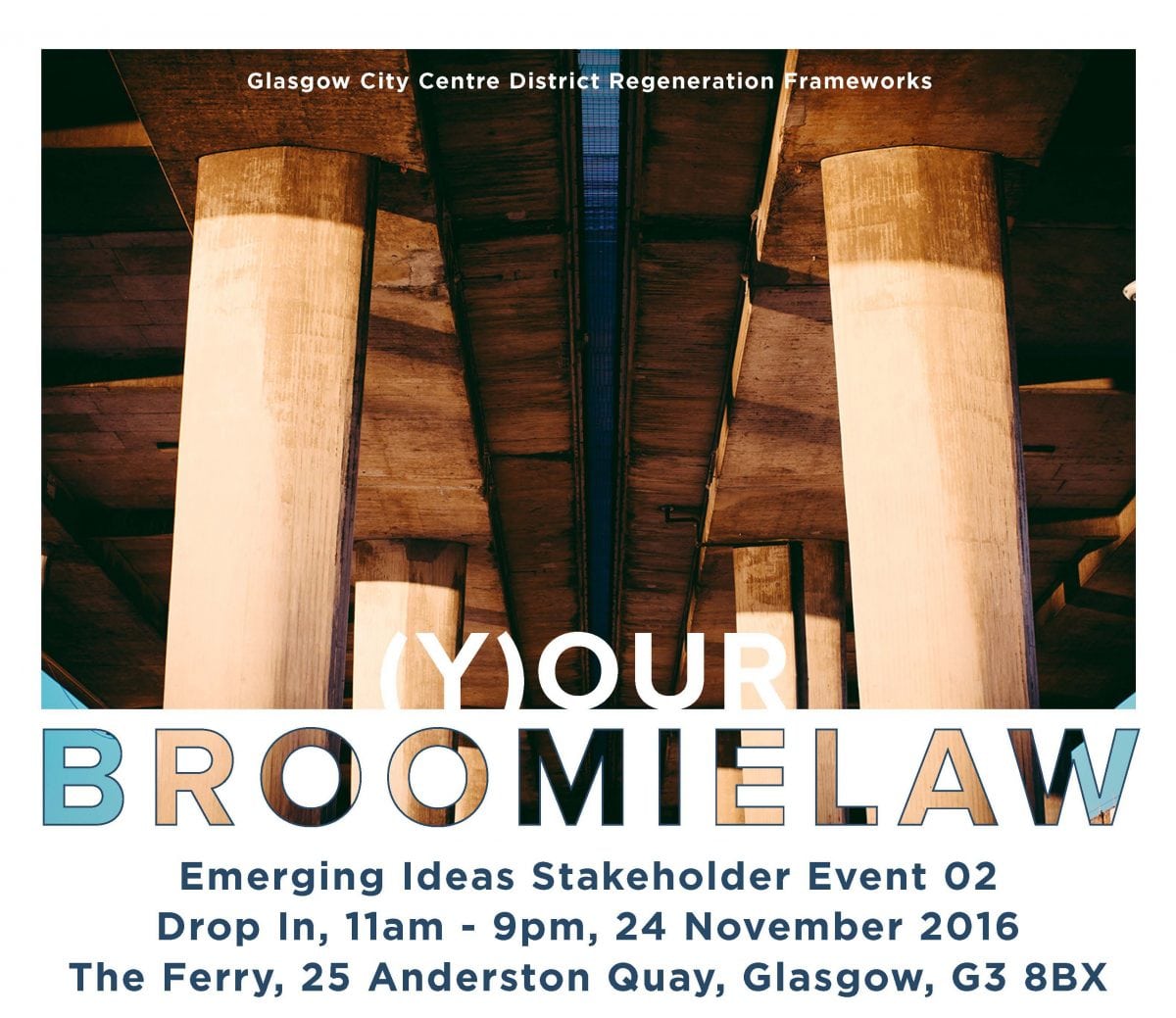
The (Y)our Broomielaw Emerging Ideas Stakeholder Event 02 will take place on 24th November 2016, and anyone with an interest in the Broomielaw area of Glasgow is invited to come along.

The event forms part of the work we are carrying out (along with a team including MVRDV and Space Syntax) to design District Regeneration Frameworks for four districts of Glasgow City Centre. The Regeneration Frameworks will look to create a clear urban structure to realise Glasgow’s economic, cultural and social potential.

The Emerging Ideas Stakeholder Event 02 on 24 November 2016 will allow you to review initial ideas, help refine proposals and inform a prioritised action plan for a new Broomielaw District Regeneration Framework. It follows on from Event 01 in October which helped set the project agenda.

Drop in to the Renfrew Ferry at any time from 11:00am till 21:00pm on Thursday 24 November to share your ideas and help shape the regeneration of (Y)our Broomielaw over the next 10 years. Come along to presentations and workshops at 2:00pm and 6.30pm to review and refine the Emerging Ideas. Sign up for the workshops at the link below.

https://www.glasgowcitycentrestrategy.com/your-broomielaw-emerging-ideas-stakeholder-event-02.htm


Hundreds celebrate as £2.4 Ayr Gaiety restoration concludes

Hundreds celebrate as £2.4 Ayr Gaiety restoration concludes

Hundreds of people took to the streets to celebrate the reopening of the much loved, B listed Gaiety in Ayr after a £2.4 million renovation and remodeling project led by Austin-Smith:Lord’s conservation team on behalf of the Ayr Gaiety Partnership concluded.

Austin-Smith:Lord delivered both the architecture and interior design of the refurbishment of The Gaiety, which is one of Scotland’s oldest theatres.

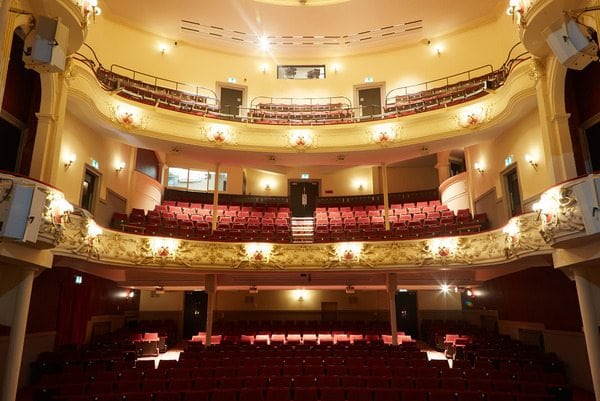
The £2.4 million makeover backed by Creative Scotland, South Ayrshire Council and Heritage Lottery Fund saw the historic Main Auditorium, which dates back to 1902, restored and transformed into a fully modernised theatre, retaining all its iconic features.

With new seating and configurations the theatre is now more accessible than ever with an increased number of wheelchair spaces available throughout the Stalls section and improved sightlines.

In addition to investment in new lighting and sound equipment, a brand-new stage has been installed and will play host to national and international performers in the coming months.

Work also included upgrading of the ticket sales area and restyling of the entrance and foyer and remodelling of the kitchen and additional back of house facilities.

As part of The Gaiety’s mission to become ‘the best wee Green Theatre in Scotland’ the Partnership also invested in a new ventilation and heating system to dramatically reduce carbon emissions.

The project to restore the theatre to her former glory took eight years of planning and raising funds, in which time the Partnership garnered national support from a wide range of funders, individuals and actors alike.

Gaiety Chief Executive Jeremy Wyatt said: Over eight years ago, Ayr Gaiety Partnership dreamt about this day. I am overwhelmed and delighted by the response we’ve received from our local and national partners and members of the community who continue to support us as we step into our next chapter

George Reynolds, Director at Austin-Smith:Lord, added: “We are thrilled and honoured to have played a role in the revitalisation of Ayrshire’s crown jewel. It’s wonderful to see the Grand Old Lady lift the curtain on her next chapter and we look forward to seeing her continue to engage and entertain audiences of all ages for many more years to come.”


The full team includes:

Client:  Ayr Gaiety Partnership
Main Contractor:  Worksmart Contracts
Interior Design Consultant:  Julia Grant
Structural Engineer:  Grossart Associates
M&E Engineers:  Irons Foulner Consulting
Quantity Surveyor:  Armour Construction Consultants
CDM/Principal Designer Adviser:  Armour Construction Consultants

Next stage of regeneration strategy for Glasgow city centre launched

Next stage of regeneration strategy for Glasgow city centre launched

Councillor Frank McAveety, Leader of Glasgow City Council, today (29 August) launched the next stage of the 10-year regeneration strategy for Glasgow city centre.

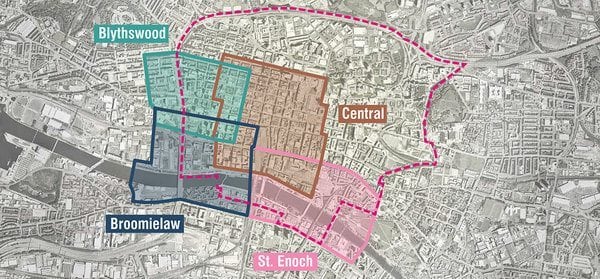
This next stage of the regeneration – the Glasgow City Centre Districts Regeneration Framework – will focus on four of the city centre’s nine districts: Broomielaw, Blythswood, Central and St. Enoch. This is the first time that stakeholders in these districts have had the collective opportunity to put forward their aspirations for regeneration and physical change.

Councillor McAveety was joined at the launch by Winy Mass, founding partner and director at MVRDV, a world-leading architectural and design firm; Graham Ross, a partner at Austin-Smith:Lord; and members of business, civic, community, economic, hotel, housing, retail, investment and development organisations.

MVRDV and Austin-Smith:Lord will work with Glasgow City Council and city stakeholders and partners to deliver the Regeneration Frameworks collaborating as part of a multi-disciplinary team with an integrated approach to architecture; connectivity; delivery; economics; engineering; finance; landscape; planning; sustainability and urban design.

The first stage in the regeneration of the city centre was carried out in 2015 for the Sauchiehall and Garnethill District Regeneration Framework. After the public consultation with local stakeholders, key recommendations for the regeneration of that district include a new cycle and pedestrian bridge as well as a new urban park over part of the M8 near Charing Cross.

Other recommendations focused on attracting and improving city living, encouraging better connectivity as well as harnessing local identity and vibrancy. Alongside these recommendations, the City Deal project will create a renewed Sauchiehall Street from Charing Cross to Rose bringing with it a tree lined “Avenue”.

Consultation with local stakeholders in the Broomielaw, Blythswood, Central and St. Enoch districts – to establish what all those with an interest want for them – will also take place before recommendations are made, with all four frameworks to be completed by 2019. The recommendations will be made on the strengths and opportunities unique to each of these districts: for example, the Broomielaw and St Enoch districts’ proximity to the river Clyde and the SSE Hydro and SECC complex present potential opportunities.

Councillor Frank McAveety, Leader of Glasgow City Council and chair of the Glasgow City Region City Cabinet, said: “The future of Glasgow city centre is of huge important to so many of us as this area is without doubt the economic powerhouse of Scotland. This next stage of the regeneration framework for the city centre will look at four districts that play a significant role in our economic and cultural life, to identify and support and then develop the assets they have in new and innovative ways to ensure Glasgow continues to grow.  There will be an investment of £115million in the city centre from the Glasgow City Region City Deal, and our engagement with the stakeholders of these areas will help decide how this investment is delivered.  At the end of this process, we can look forward to a city centre that has changed for the better to become an even more attractive place in which to live, work, study, invest and visit.”

Winy Mass, Founding Partner and Director at MVRDV, said: “It is both an incredible pleasure and a great responsibility to work on the transformation of Glasgow’s heart because it touches people’s lives and the identity of their city. For this reason we collaborate with the Glaswegians on their city. The project is titled (Y)OUR CITY CENTRE and it is an overall plan made of many elements ranging from larger scale interventions concerning liveability, the infrastructure, the meaning of the river; to the small scale in which bottom-up initiatives, street furniture and the development of small plots is considered. The outcome will be presented to the citizens for an open dialogue about the future of Glasgow.

Graham Ross, Office Principal of Austin-Smith:Lord’s Glasgow studio, said: “We’re delighted to launch the next step in the preparation of the Regeneration Frameworks for Broomielaw, St. Enoch, Central and Blythswood. We’re starting a conversation with Glaswegians about their city centre; looking to work collaboratively and creatively to imagine how these Districts can be in the future. We’re keen to discuss (Y)OUR CITY CENTRE ideas. These can be shared at forthcoming on-street events and interactive workshops in the Districts, on a dedicated website, online questionnaire and via social media.

Key priorities for the regeneration of the city centre include an improved environment, driven by the creation of Avenues to connect between and throughout districts, promoting cycling and walking; economic growth; development of vacant sites; and attracting investment to ensure Glasgow maintains its place as a top European investment location. The framework will take an integrated approach to the following issues: architecture; connectivity; delivery; economics; engineering; finance; landscape; planning; sustainability and urban design.

A dedicated website for this next stage of the city centre strategy has been established at www.yourcitycentre.com and more information on the regeneration of Glasgow City Centre is available at: https://www.glasgowcitycentrestrategy.com/news-from-the-city-centre-team.


The team also includes Douglas Wheeler Associates, WAVEparticle, Ryden, Urban Tide, Arup, Studio Grams and Gardiner + Theobald.

Image copyright: Glasgow City Council


Riverside Regeneration at Hamadryad Park

Riverside Regeneration at Hamadryad Park

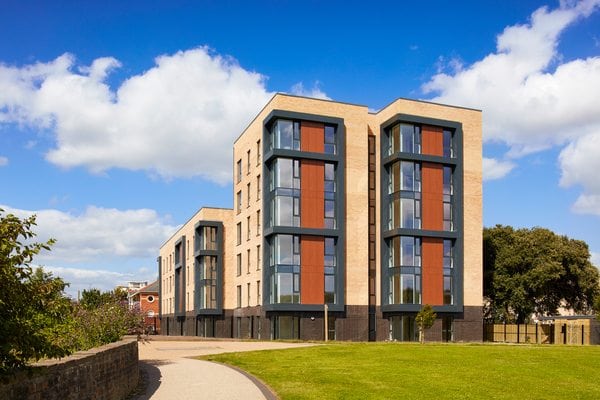
This week tenants move into a new apartment building on the banks of the River Taff, which has added a stunning feature to the riverside vista.

Situated behind the Hamadryad Centre, on the edge of Hamadryad Park, the new building, which was commissioned by Cardiff Community Housing Association (CCHA), comprises 55 one and two bedroom apartments over four and six storeys.

The land on which the apartments are built had lain undeveloped for many years, as a succession of developers failed to unlock this challenging site, which called for a development that would do justice to its prominent position on the River Taff corridor, with panoramic views towards Cardiff Bay and the Bristol Channel and back towards Cardiff City Centre.

Lead architect Tope Balogun of Austin-Smith:Lord commented: “In collaboration with CCHA and Cardiff Council we worked hard to find creative solutions that delivered a high quality of design within a challenging budget.

“I believe that what we have achieved is a building that not only offers residents a high standard of accommodation, with spectacular outward views, but also contributes positively to the wider built environment and enhances its special setting.

“The design also took into account the development’s relationship to the existing community and environment, including a former Victorian hospital which houses a health facility and groupings of mature trees which were retained.

“The resulting design offers some of the most desirable apartments within Cardiff Bay.”

An innovative lightweight steel frame was used by construction contractors, Morganstone, which reduced construction time, meaning that the building was completed two months ahead of schedule.

This has allowed CCHA to show the apartments to prospective tenants earlier than anticipated with the first new residents getting the key to their new homes this week.

Chief Executive of CCHA, Kevin Protheroe said: “CCHA’s vision is ‘providing homes, regenerating communities’, and developing new affordable housing is a key way in which we achieve this. Our Hamadryad development has created 55 very desirable apartments with fantastic views across the city, which the new tenants are thrilled with.”

‘Field of Dreams’ now underway for Deafblind Scotland

‘Field of Dreams’ now underway for Deafblind Scotland

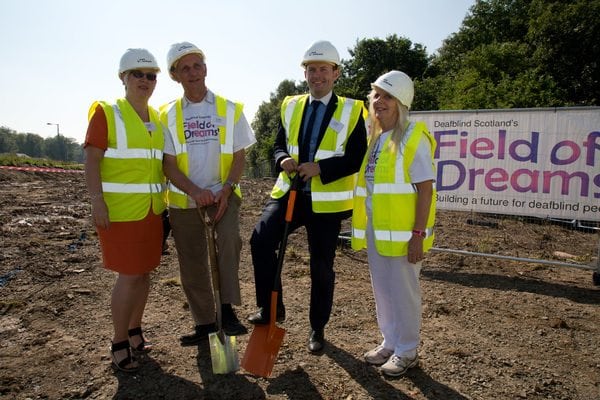
The sod cutting ceremony took place on 17th August for a new, bespoke centre commissioned by leading charity Deafblind Scotland. The centre, located in Lenzie, was designed by Austin-Smith:Lord for Clark Contracts.

The 7,500 square foot building will be a Centre of Excellence for deafblind people with a training and development centre, a daily resource for more than 300 deafblind people in the Glasgow area, and a further resource for the 2,700 people across Scotland who are severely dual sensory impaired.

Called ‘The Field of Dreams’, the £1.5m project will offer deafblind people more opportunities to learn, to enjoy a range of subjects, and to become more familiar with IT and accessing the internet and emails, with the help of specially adapted technology and equipment.

Ruth Dorman, Chief Executive, Deafblind Scotland  said “Building our ‘field of dreams’ is the culmination of nearly a decade of fundraising, design debating and all round commitment from the board of trustees, Deafblind members and staff. I am delighted to be working with all concerned to realise this dream.”

Michael Scanlan, Director, Clark Contracts, said: “It is a great honour to be selected to deliver such a vital facility that will help improve the lives of so many deserving people. We were very happy to work with Deafblind Scotland to value engineer the project and to find a way of delivering this important building within the charity’s budget, for a cost that does not compromise on quality.”

Andrew McCafferty, Director of Austin-Smith:Lord said: “We are absolutely delighted to be assisting Clark Contracts and leading the design of  Deafblind Scotland’s new Learning & Resource Centre, creating a socially inclusive building within the local community and promoting access for all.”

Scotland’s first Outdoor Museum in Helensburgh wins national Saltire Arts in Public Places Award

Scotland’s first Outdoor Museum in Helensburgh wins national Saltire Arts in Public Places Award

Scotland’s first Outdoor Museum, situated in Helensburgh town centre, has won a Saltire Society Arts in Public Places Award 2016.

The Museum was curated and delivered by art organisation WAVEparticle in collaboration with Austin-Smith:Lord for Argyll and Bute Council.

The Saltire Society Arts in Public Places Awards, which were awarded at a ceremony at the Saltire Society Headquarters in Edinburgh on Thursday 11th August, highlight excellence and demonstrate how arts and crafts can be an intrinsic and beautiful part of our built environment.

The innovative Outdoor Museum sits at the heart of Helensburgh’s wider revitalised town centre public realm, which we designed as part of Argyll and Bute Council’s CHORD regeneration initiative.

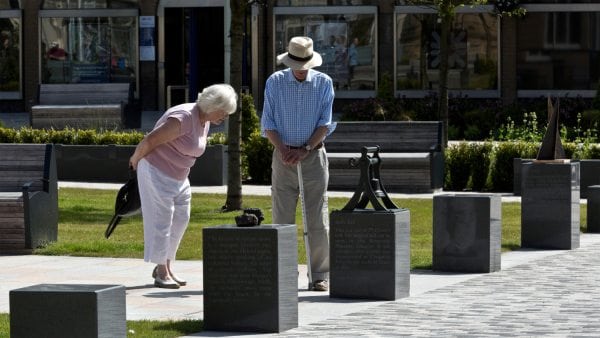
The Outdoor Museum in Colquhoun Square was developed and curated with the input and support of local residents, schools and organisations, which helped gather together stories and artefacts about the town that are surprising and revealing, entertaining and stimulating, as well as educational and informative.

The resulting collection features a series of historic artefacts encapsulated in acrylic and three specially commissioned artworks by Lesley Carruthers, Kate Ive and Chris Coleman-Smith.

Together, the exhibits include a celebration of Science – John Logie Baird’s Stookie Bill;
 Business – the ‘Lily Springs’ and the ‘Comrie’ bottling plants;
Art and Craft – the wee shoes crafted by the town’s first shoemaker; Social History – a family heirloom that comes with the story of the lost art of making bespoke butter pats; and Entrepreneurship – the bell of the famous PS Comet commissioned by Henry Bell of Helensburgh, regarded as the father of steam navigation.

Each exhibit has a plinth which gives the historical, cultural and geographic context to the exhibit as well as a QR code linking to the Museum website: www.theoutdoormuseum.com

Argyll and Bute Council’s Policy Lead for Infrastructure, Helensburgh Councillor Ellen Morton, welcomed the news, saying This is yet another piece of good news for Helensburgh. Winning yet another award is a huge success and is just another in a long list of reasons for people to visit the town.

“The museum makes the newly revamped Colquhoun Square a very interesting place to visit. We would encourage anyone, resident or visitor, to go and take a look.

“The focus of this ambitious council is on attracting people to our area, creating jobs and economic prosperity. Projects like this go a long way to doing just that.’’

WAVEparticle Lead Artist, Peter McCaughey, added It’s fantastic to win this Saltire Award. There were brilliant projects from across Scotland in the running for this and to have won is great for everyone involved. The Saltire Award is the latest in a series of awards and prestigious nominations this year, and our hope is it that this makes the future of the Outdoor Museum undeniable and that each year we see wonderful additions to this alternative museum, embedded at the heart of Helensburgh.”

Graham Ross, Austin-Smith:Lord Partner, concluded We are delighted that the exemplary work of our friends and regular collaborators at WAVEparticle has rightly received national recognition with a prestigious Saltire Award for Arts in Public Places. The Outdoor Museum emerged from a creative collaboration between Austin-Smith:Lord and WAVEparticle and responded directly to the Helensburgh community’s desire for a Town Museum which we thought could be integrated into the reimagined Colquhoun Square.

WAVEparticle has curated and delivered a unique integration of place-specific public art in a contemporary town square and it has been a privilege to collaborate with them to realise our original idea.


“The Outdoor Museum, like the wider regeneration of the town centre public realm, was very much community-focussed and this sense of place shines through.
The vision to create an accessible Outdoor Museum that explores, celebrates and displays the rich and varied history of Helensburgh for local residents and visitors to the town, was developed through a series of community events held over the course of two years.
Involving the community so closely ensured that the Outdoor Museum reflects and records some of the great untold stories, gems of history and heritage, across the town.


“It is also particularly pleasing that the project receives this recognition in the Saltire Society’s 80th anniversary year and in the midst of this Year of Innovation, Architecture and Design.”

This is the third national award this year for the wider Helensburgh town centre public realm project which was completed in summer 2015.
The project has also been recognised with a prestigious Royal Incorporation of Architects in Scotland (RIAS) Award as well as a Scottish Design Award.

The project is also short listed in the forthcoming RIAS Doolan Award for Architecture, the largest architectural prize in the UK and one of the most significant architecture awards in the world.

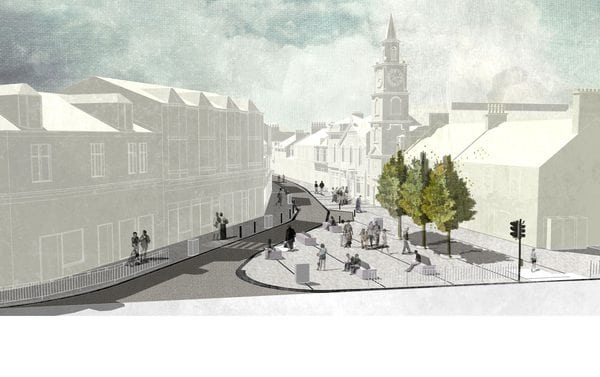
As well as the Outdoor Museum, Helensburgh Town Centre now features attractive, usable and flexible public spaces, walkways, soft landscaped areas, tree lines and lighting columns set out in a way which enhances and frames the high-quality, listed buildings within Colquhoun Square, the civic heart of the town. The project also includes the redevelopment of all of the principal surrounding streets and the West Bay Esplanade.


The full project team includes WAVEparticle, Robinson Low Francis, O’Connor Sutton Cronin and Transport Planning Ltd. The main contractor was Maclay.


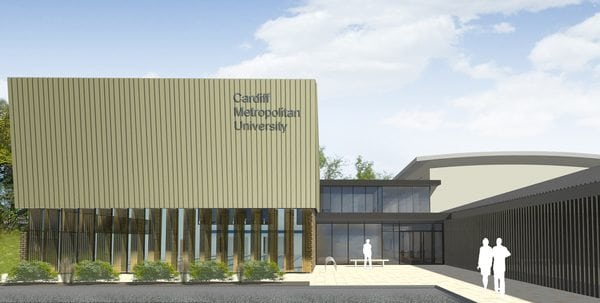
Appointed for £11.6m Sports Complex at Cardiff Metropolitan University

Appointed for £11.6m Sports Complex at Cardiff Metropolitan University

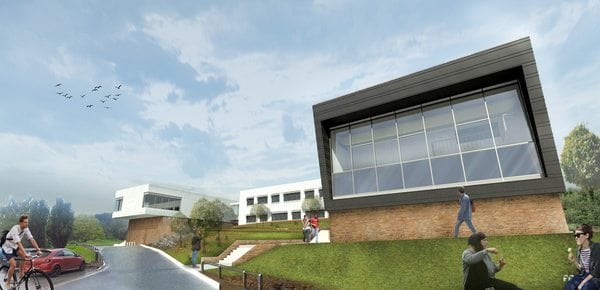
Austin-Smith:Lord has been appointed for the design of Phase 2 of the new £11.6m Sports Complex on the Cyncoed Campus at Cardiff Metropolitan University.

We are currently on site with Phase 1 of the ambitious project to create new state of the art facilities to complement the range of world-class sports amenities already available at the University.

Subject to planning permission, it is hoped that the second and final phase of construction of the new Sports Complex will be completed for the 2018/2019 academic year.

Cardiff Metropolitan University has established itself as one of the leading universities for student sport in the UK offering a wide range of high quality sports facilities and activities to cater for elite athletes through to students, staff and the wider community.

Phase 1 centres on a large new Sports Hall which will accommodate premier competition level netball and basketball training and club level courts for badminton, basketball and netball as well as spectator seats, storage, changing rooms and entrance space.  This phase is due for completion in early 2017.

The Phase 2 newbuild development will feature a 6 lane 25m swimming pool, fitness centre, dance studio and squash courts, together with associated changing and ancillary spaces.

Martin Roe, Austin-Smith:Lord Partner and Cardiff Studio Principal, says: “We are delighted to continue our collaboration with the forward thinking Cardiff Metropolitan University and help ensure that the School of Sports continues to deliver excellence in teaching and learning through sports performance and participation.”

Austin-Smith:Lord recently completed an extension to the University’s National Indoor Athletics Centre, which was the first purpose built indoor athletics track in the UK.

Previous projects with Cardiff Metropolitan University include the RIBA Award winning Cardiff School of Management and Cardiff School of Art and Design.

Austin-Smith:Lord offers expertise across a wide range of sectors and disciplines including educationindustry and infrastructure, transport, urban regeneration, civic, commercial, arts and culture, healthcare, residential, conservation, interior design, landscape and urban design.

Dragons to return to The Great Pagoda at Kew after 200 year hunt

Dragons to return to The Great Pagoda at Kew after 200 year hunt

We are working with Historic Royal Palaces on one of the most exciting and important conservation projects within the UK, if not Europe – the restoration of The Great Pagoda in the Royal Botanic Gardens, Kew, London.

Our conservation architects are providing the technical conservation expertise on the two year project to restore the famous Kew Pagoda to its 18th century splendour.

Following extensive research by Historic Royal Palaces and physical analysis, original paint colours and lost architectural detailing will be reintroduced on the Pagoda, which was one of the jewels in the crown of Georgian London.

This unique conservation project will also include the restoration of the eighty decorative dragons missing from the Pagoda for over two hundred years.

Designed at the height of the eighteenth century craze for Chinoiserie, The Great Pagoda at Kew was famously adorned with eighty brightly coloured wooden dragons.The eye-catching dragons were the talk of the town for twenty years, before disappearing in the 1780s, rumoured to be payment for the Prince Regent’s gambling debts.

Probably commissioned by Princess Augusta, and designed by the eminent architect Sir William Chambers, Londoners and tourists alike flocked to see the striking 163ft (nearly 50m) tall building, which formed part of a homage to the Grand Tour in the famous gardens. It also offered one of the earliest and finest bird’s eye views of London.

Observers were most impressed by the dragons. Though memorable, the dragons were removed in 1784, when repairs were undertaken to the ten storey building’s roof. Though rumoured to have been payment for the Prince Regent’s debts, experts believe that, being made of wood, they had simply rotted over time.

Remarkably, in spite of their fame, none of the eighty dragons appear to have survived, beginning a two hundred year hunt to rediscover or replace them.

The architect who designed the Palm House – Decimus Burton – made an attempt as early as 1843, and right up to the 1970s, the mystery of the lost dragons and the question of how to replicate them was still being discussed. Finally it is anticipated that eighty new dragons will adorn the Pagoda once more.

David Millar, Director and Head of Conservation at Austin-Smith:Lord, says: “We are thrilled to be working with Historic Royal Palaces and project sponsor Royal Botanic Gardens, Kew, on the restoration of the Great Pagoda

“This exotic octagonal brick and timber tower structure, which closely resembles the Chinese ‘ting’ temples that Chambers probably saw on his visits to Canton, is a true masterpiece of 18th century English architecture.

“We look forward to seeing this extraordinary part of our architectural heritage standing tall and proud once again.”

Craig Hatto, Project Manager, Historic Royal Palaces, says: “It has been fascinating to piece together the story of the elusive dragons, missing from this remarkable building for over two centuries. Using tantalising contemporary accounts and drawings, and taking inspiration from surviving eighteenth century dragons in houses and museums across Europe, we’ll be pulling together a team of specialist craftsmen to ensure the new dragons are as faithful to the original design as possible.”


Please contact Joanna Harrison (07884 187404) or  Ilya Scott (07799 416476) of Real PR with any press queries

GoMA Restoration Complete

GoMA Restoration Complete

A project to restore the clock tower at one of Glasgow’s most famous buildings led by Austin-Smith:Lord has now been completed. Restoration work at the Gallery of Modern Art (GoMA) focused on the 189 year old clock tower and weather vane, which have been cleaned, restored and reinstated.

Previously coated in stained cream masonry paint and cement repairs, together with vegetation growing out of the Corinthian column bases, the clock tower needed an extensive series of conservation repairs.

Glasgow Life, which manages GoMA, instructed conservation accredited architects at the Glasgow studio of Austin-Smith:Lord to assess the true condition of the tower and advise on a suitable repair strategy.

The project, which was undertaken by City Building Group LLp and CBC Stone, received financial grant support from Historic Environment Scotland.

Initially the team began repairing the tower by cleaning off old paint, which was causing damage to the stonework, redecorating the clock face and removing vegetation from the building.

However, during the examination of the sandstone masonry, the restorers discovered some serious errors in the way in which the original tower had been constructed, between 1827 and 1829.  This necessitated more extensive conservation repairs, including replacing stones that were incorrectly bedded in the past.

Depute Leader of Glasgow City Council and Chair of Glasgow Life, Councillor Archie Graham, said: “The Gallery of Modern Art is a building firmly tied to the history of Glasgow itself.  We are delighted to reveal the restored clock tower and weather vane, in complete working order just in time for its 200th anniversary.

“I’m very pleased with the delicate restoration work undertaken by Austin-Smith:Lord, who were careful to ensure the results were sympathetic to the historic keeping of the building and the wider environment.  This refurbishment ensures generations to come have the opportunity to enjoy this beautiful building in full as it was originally intended.”

David Millar, Director and Head of Conservation at Austin-Smith:Lord, added: “This has been a very interesting and challenging project, assessing solutions and actions that would both enhance the visual aesthetic of this landmark, but also ensure an improved lifespan of the masonry structure into the future.

“There is always a level of risk associated with removing paint from sandstone but it’s an exciting activity as you don’t know what you might find!  We discovered masonry wrongly bedded and sandstone heavily carbonated and although some individuals might like to see these dark deposits removed, it’s not good practice as you are potentially removing too much original historic and listed fabric

“We have steam cleaned and removed loose material and carried out indent repairs and what we have represented follows good conservation practice.  We think the final result is both beautiful and able to stand the test of time.”

Frazer Gibson, Project Manager from Historic Environment Scotland added: “We were pleased to award funding to the Gallery of Modern Art in March 2015 to help them restore the existing masonry of the tower and enhance the heritage merit of the museum, one of Glasgow’s most iconic public buildings. It’s great to see the work now complete, and we hope this encourages even more people to go along and see what this beautiful historic building has to offer.”

Some 600,000 people have been to GoMA in the last year, making it Scotland’s most visited modern art gallery.  It also guaranteed the popular museum a place in the coveted Top Ten most visited attractions in Scotland during 2015.

The Royal Exchange Square building was originally constructed in 1778 as the townhouse of William Cunninghame of Lainshaw, one of Glasgow’s wealthy tobacco lords. It later became a bank in 1816 -17 when it was enlarged to create the Royal Exchange.  It was this work which added the Corinthian pillars of the temple frontage to Queen Street and the Cupola and clock tower design. The Royal Exchange was later purchased by Glasgow Corporation in November 1949 for £105,000.


Please contact Joanna Harrison (07884 187404) or  Ilya Scott (07799 416476) of Real PR with any press queries

Helensburgh wins prestigious RIAS Award

Helensburgh wins prestigious RIAS Award

Helensburgh’s revitalised town centre public realm, designed by Austin-Smith:Lord, took home a prestigious Royal Incorporation of Architects in Scotland (RIAS) Award at a high profile ceremony held at the Hilton Hotel, Glasgow, last night (Wednesday 15th June).

This year’s RIAS awards, which celebrate the very best that is being built in Scotland, are particularly significant coming in the centenary of the institute.

RIAS commended the bold regeneration project, which forms part of Argyll and Bute Council’s CHORD regeneration initiative, for delivering on ‘the design ethos to create a town centre with attractive, usable and flexible public spaces to support community events, festivals and markets.’

Along with the other RIAS 2016 award winners, Helensburgh Town Centre will now be part of the short-list for the RIAS Doolan Award for Architecture. The architects of the winning project in the Doolan Award will receive £25,000, making this both the largest architectural prize in the UK and one of the most significant architecture awards in the world.

This is the second national award for Helensburgh Town Centre. Last month, the innovative project was recognised with a Scottish Design Award, which rewards top architecture firms and design agencies for their contribution to the country’s historic and contemporary design culture.

The project was also short-listed for four other awards this year – RICS Awards 2016, FX International Design Awards, the Civic Trust Awards and the Scottish Property Awards.

As well as attractive, usable and flexible public spaces, Helensburgh Town Centre now features walkways, soft landscaped areas, tree lines and lighting columns set out in a way which enhances and frames the high-quality, listed buildings within Colquhoun Square, the civic heart of the town.

Completed in summer 2015, the project also includes an innovative ‘Outdoor Museum’ in Colquhoun Square as well as the redevelopment of all of the principal surrounding streets and the West Bay Esplanade.

Graham Ross, Austin-Smith:Lord Partner, says: “We are all the more thrilled to receive such a prestigious award in the centenary year of the Royal Incorporation of Architects in Scotland. It’s an honour to be amongst an impressive crop of RIAS award winners that collectively showcase the best in contemporary Scottish architecture and design.

“Community consultation and collaborative working by a talented team has been at the heart of delivering this successful project in Helensburgh. In the midst of this week’s World Town Leadership Summit in Edinburgh, the example of Helensburgh demonstrates the positive impact town centre regeneration can have.

“The RIAS Award recognises both the vision of Argyll and Bute Council’s CHORD regeneration project as well as design team’s ability to interpret the hopes and ideas of local people to transform their town for the better.”


The full project team includes WAVEparticle, Robinson Low Francis, O’Connor Sutton Cronin and Transport Planning Ltd. The main contractor was Maclay.