Scotland’s first Outdoor Museum in Helensburgh wins national Saltire Arts in Public Places Award

Scotland’s first Outdoor Museum in Helensburgh wins national Saltire Arts in Public Places Award

Scotland’s first Outdoor Museum, situated in Helensburgh town centre, has won a Saltire Society Arts in Public Places Award 2016.

The Museum was curated and delivered by art organisation WAVEparticle in collaboration with Austin-Smith:Lord for Argyll and Bute Council.

The Saltire Society Arts in Public Places Awards, which were awarded at a ceremony at the Saltire Society Headquarters in Edinburgh on Thursday 11th August, highlight excellence and demonstrate how arts and crafts can be an intrinsic and beautiful part of our built environment.

The innovative Outdoor Museum sits at the heart of Helensburgh’s wider revitalised town centre public realm, which we designed as part of Argyll and Bute Council’s CHORD regeneration initiative.

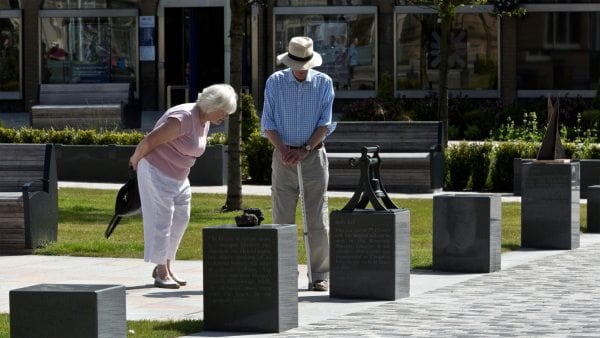
The Outdoor Museum in Colquhoun Square was developed and curated with the input and support of local residents, schools and organisations, which helped gather together stories and artefacts about the town that are surprising and revealing, entertaining and stimulating, as well as educational and informative.

The resulting collection features a series of historic artefacts encapsulated in acrylic and three specially commissioned artworks by Lesley Carruthers, Kate Ive and Chris Coleman-Smith.

Together, the exhibits include a celebration of Science – John Logie Baird’s Stookie Bill;
 Business – the ‘Lily Springs’ and the ‘Comrie’ bottling plants;
Art and Craft – the wee shoes crafted by the town’s first shoemaker; Social History – a family heirloom that comes with the story of the lost art of making bespoke butter pats; and Entrepreneurship – the bell of the famous PS Comet commissioned by Henry Bell of Helensburgh, regarded as the father of steam navigation.

Each exhibit has a plinth which gives the historical, cultural and geographic context to the exhibit as well as a QR code linking to the Museum website: www.theoutdoormuseum.com


Argyll and Bute Council’s Policy Lead for Infrastructure, Helensburgh Councillor Ellen Morton, welcomed the news, saying “This is yet another piece of good news for Helensburgh. Winning yet another award is a huge success and is just another in a long list of reasons for people to visit the town.

“The museum makes the newly revamped Colquhoun Square a very interesting place to visit. We would encourage anyone, resident or visitor, to go and take a look.

“The focus of this ambitious council is on attracting people to our area, creating jobs and economic prosperity. Projects like this go a long way to doing just that.’’

WAVEparticle Lead Artist, Peter McCaughey, added “It’s fantastic to win this Saltire Award. There were brilliant projects from across Scotland in the running for this and to have won is great for everyone involved. The Saltire Award is the latest in a series of awards and prestigious nominations this year, and our hope is it that this makes the future of the Outdoor Museum undeniable and that each year we see wonderful additions to this alternative museum, embedded at the heart of Helensburgh.”

Graham Ross, Austin-Smith:Lord Partner, concluded “We are delighted that the exemplary work of our friends and regular collaborators at WAVEparticle has rightly received national recognition with a prestigious Saltire Award for Arts in Public Places. The Outdoor Museum emerged from a creative collaboration between Austin-Smith:Lord and WAVEparticle and responded directly to the Helensburgh community’s desire for a Town Museum which we thought could be integrated into the reimagined Colquhoun Square.

“WAVEparticle has curated and delivered a unique integration of place-specific public art in a contemporary town square and it has been a privilege to collaborate with them to realise our original idea.


“The Outdoor Museum, like the wider regeneration of the town centre public realm, was very much community-focussed and this sense of place shines through.
The vision to create an accessible Outdoor Museum that explores, celebrates and displays the rich and varied history of Helensburgh for local residents and visitors to the town, was developed through a series of community events held over the course of two years.
Involving the community so closely ensured that the Outdoor Museum reflects and records some of the great untold stories, gems of history and heritage, across the town.


“It is also particularly pleasing that the project receives this recognition in the Saltire Society’s 80th anniversary year and in the midst of this Year of Innovation, Architecture and Design.”

This is the third national award this year for the wider Helensburgh town centre public realm project which was completed in summer 2015.
The project has also been recognised with a prestigious Royal Incorporation of Architects in Scotland (RIAS) Award as well as a Scottish Design Award.

The project is also short listed in the forthcoming RIAS Doolan Award for Architecture, the largest architectural prize in the UK and one of the most significant architecture awards in the world.

As well as the Outdoor Museum, Helensburgh Town Centre now features attractive, usable and flexible public spaces, walkways, soft landscaped areas, tree lines and lighting columns set out in a way which enhances and frames the high-quality, listed buildings within Colquhoun Square, the civic heart of the town. The project also includes the redevelopment of all of the principal surrounding streets and the West Bay Esplanade.


The full project team includes WAVEparticle, Robinson Low Francis, O’Connor Sutton Cronin and Transport Planning Ltd. The main contractor was Maclay.
Appointed for £11.6m Sports Complex at Cardiff Metropolitan University

Appointed for £11.6m Sports Complex at Cardiff Metropolitan University

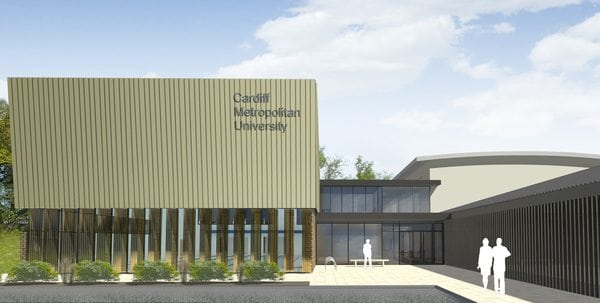
Austin-Smith:Lord has been appointed for the design of Phase 2 of the new £11.6m Sports Complex on the Cyncoed Campus at Cardiff Metropolitan University.

We are currently on site with Phase 1 of the ambitious project to create new state of the art facilities to complement the range of world-class sports amenities already available at the University.

Subject to planning permission, it is hoped that the second and final phase of construction of the new Sports Complex will be completed for the 2018/2019 academic year.

Cardiff Metropolitan University has established itself as one of the leading universities for student sport in the UK offering a wide range of high quality sports facilities and activities to cater for elite athletes through to students, staff and the wider community.

Phase 1 centres on a large new Sports Hall which will accommodate premier competition level netball and basketball training and club level courts for badminton, basketball and netball as well as spectator seats, storage, changing rooms and entrance space.  This phase is due for completion in early 2017.

The Phase 2 newbuild development will feature a 6 lane 25m swimming pool, fitness centre, dance studio and squash courts, together with associated changing and ancillary spaces.

Martin Roe, Austin-Smith:Lord Partner and Cardiff Studio Principal, says: “We are delighted to continue our collaboration with the forward thinking Cardiff Metropolitan University and help ensure that the School of Sports continues to deliver excellence in teaching and learning through sports performance and participation.”

Austin-Smith:Lord recently completed an extension to the University’s National Indoor Athletics Centre, which was the first purpose built indoor athletics track in the UK.

Previous projects with Cardiff Metropolitan University include the RIBA Award winning Cardiff School of Management and Cardiff School of Art and Design.

Austin-Smith:Lord offers expertise across a wide range of sectors and disciplines including education, industry and infrastructure, transport, urban regeneration, civic, commercial, arts and culture, healthcare, residential, conservation, interior design, landscape and urban design.

Dragons to return to The Great Pagoda at Kew after 200 year hunt

Dragons to return to The Great Pagoda at Kew after 200 year hunt

We are working with Historic Royal Palaces on one of the most exciting and important conservation projects within the UK, if not Europe – the restoration of The Great Pagoda in the Royal Botanic Gardens, Kew, London.

Our conservation architects are providing the technical conservation expertise on the two year project to restore the famous Kew Pagoda to its 18th century splendour.

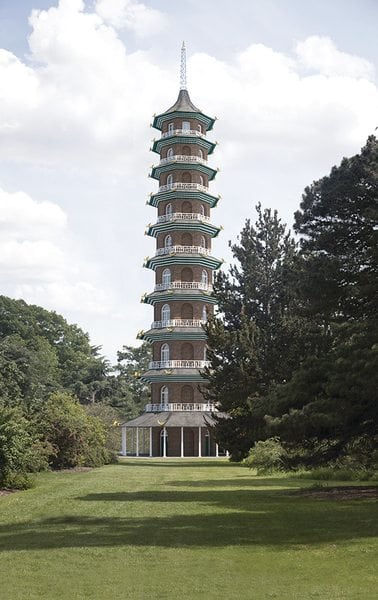
Following extensive research by Historic Royal Palaces and physical analysis, original paint colours and lost architectural detailing will be reintroduced on the Pagoda, which was one of the jewels in the crown of Georgian London.

This unique conservation project will also include the restoration of the eighty decorative dragons missing from the Pagoda for over two hundred years.

Designed at the height of the eighteenth century craze for Chinoiserie, The Great Pagoda at Kew was famously adorned with eighty brightly coloured wooden dragons.The eye-catching dragons were the talk of the town for twenty years, before disappearing in the 1780s, rumoured to be payment for the Prince Regent’s gambling debts.

Probably commissioned by Princess Augusta, and designed by the eminent architect Sir William Chambers, Londoners and tourists alike flocked to see the striking 163ft (nearly 50m) tall building, which formed part of a homage to the Grand Tour in the famous gardens. It also offered one of the earliest and finest bird’s eye views of London.

Observers were most impressed by the dragons. Though memorable, the dragons were removed in 1784, when repairs were undertaken to the ten storey building’s roof. Though rumoured to have been payment for the Prince Regent’s debts, experts believe that, being made of wood, they had simply rotted over time.

Remarkably, in spite of their fame, none of the eighty dragons appear to have survived, beginning a two hundred year hunt to rediscover or replace them.

The architect who designed the Palm House – Decimus Burton – made an attempt as early as 1843, and right up to the 1970s, the mystery of the lost dragons and the question of how to replicate them was still being discussed. Finally it is anticipated that eighty new dragons will adorn the Pagoda once more.

David Millar, Director and Head of Conservation at Austin-Smith:Lord, says: “We are thrilled to be working with Historic Royal Palaces and project sponsor Royal Botanic Gardens, Kew, on the restoration of the Great Pagoda

“This exotic octagonal brick and timber tower structure, which closely resembles the Chinese ‘ting’ temples that Chambers probably saw on his visits to Canton, is a true masterpiece of 18th century English architecture.

“We look forward to seeing this extraordinary part of our architectural heritage standing tall and proud once again.”

Craig Hatto, Project Manager, Historic Royal Palaces, says: “It has been fascinating to piece together the story of the elusive dragons, missing from this remarkable building for over two centuries. Using tantalising contemporary accounts and drawings, and taking inspiration from surviving eighteenth century dragons in houses and museums across Europe, we’ll be pulling together a team of specialist craftsmen to ensure the new dragons are as faithful to the original design as possible.”


Please contact Joanna Harrison (07884 187404) or  Ilya Scott (07799 416476) of Real PR with any press queries

GoMA Restoration Complete

GoMA Restoration Complete

A project to restore the clock tower at one of Glasgow’s most famous buildings led by Austin-Smith:Lord has now been completed. Restoration work at the Gallery of Modern Art (GoMA) focused on the 189 year old clock tower and weather vane, which have been cleaned, restored and reinstated.

Previously coated in stained cream masonry paint and cement repairs, together with vegetation growing out of the Corinthian column bases, the clock tower needed an extensive series of conservation repairs.

Glasgow Life, which manages GoMA, instructed conservation accredited architects at the Glasgow studio of Austin-Smith:Lord to assess the true condition of the tower and advise on a suitable repair strategy.

The project, which was undertaken by City Building Group LLp and CBC Stone, received financial grant support from Historic Environment Scotland.

Initially the team began repairing the tower by cleaning off old paint, which was causing damage to the stonework, redecorating the clock face and removing vegetation from the building.

However, during the examination of the sandstone masonry, the restorers discovered some serious errors in the way in which the original tower had been constructed, between 1827 and 1829.  This necessitated more extensive conservation repairs, including replacing stones that were incorrectly bedded in the past.

Depute Leader of Glasgow City Council and Chair of Glasgow Life, Councillor Archie Graham, said: “The Gallery of Modern Art is a building firmly tied to the history of Glasgow itself.  We are delighted to reveal the restored clock tower and weather vane, in complete working order just in time for its 200th anniversary.

“I’m very pleased with the delicate restoration work undertaken by Austin-Smith:Lord, who were careful to ensure the results were sympathetic to the historic keeping of the building and the wider environment.  This refurbishment ensures generations to come have the opportunity to enjoy this beautiful building in full as it was originally intended.”

David Millar, Director and Head of Conservation at Austin-Smith:Lord, added: “This has been a very interesting and challenging project, assessing solutions and actions that would both enhance the visual aesthetic of this landmark, but also ensure an improved lifespan of the masonry structure into the future.

“There is always a level of risk associated with removing paint from sandstone but it’s an exciting activity as you don’t know what you might find!  We discovered masonry wrongly bedded and sandstone heavily carbonated and although some individuals might like to see these dark deposits removed, it’s not good practice as you are potentially removing too much original historic and listed fabric. 

“We have steam cleaned and removed loose material and carried out indent repairs and what we have represented follows good conservation practice.  We think the final result is both beautiful and able to stand the test of time.”

Frazer Gibson, Project Manager from Historic Environment Scotland added: “We were pleased to award funding to the Gallery of Modern Art in March 2015 to help them restore the existing masonry of the tower and enhance the heritage merit of the museum, one of Glasgow’s most iconic public buildings. It’s great to see the work now complete, and we hope this encourages even more people to go along and see what this beautiful historic building has to offer.”

Some 600,000 people have been to GoMA in the last year, making it Scotland’s most visited modern art gallery.  It also guaranteed the popular museum a place in the coveted Top Ten most visited attractions in Scotland during 2015.

The Royal Exchange Square building was originally constructed in 1778 as the townhouse of William Cunninghame of Lainshaw, one of Glasgow’s wealthy tobacco lords. It later became a bank in 1816 -17 when it was enlarged to create the Royal Exchange.  It was this work which added the Corinthian pillars of the temple frontage to Queen Street and the Cupola and clock tower design. The Royal Exchange was later purchased by Glasgow Corporation in November 1949 for £105,000.


Please contact Joanna Harrison (07884 187404) or  Ilya Scott (07799 416476) of Real PR with any press queries

Helensburgh wins prestigious RIAS Award

Helensburgh wins prestigious RIAS Award

Helensburgh’s revitalised town centre public realm, designed by Austin-Smith:Lord, took home a prestigious Royal Incorporation of Architects in Scotland (RIAS) Award at a high profile ceremony held at the Hilton Hotel, Glasgow, last night (Wednesday 15th June).

This year’s RIAS awards, which celebrate the very best that is being built in Scotland, are particularly significant coming in the centenary of the institute.

RIAS commended the bold regeneration project, which forms part of Argyll and Bute Council’s CHORD regeneration initiative, for delivering on ‘the design ethos to create a town centre with attractive, usable and flexible public spaces to support community events, festivals and markets.’

Along with the other RIAS 2016 award winners, Helensburgh Town Centre will now be part of the short-list for the RIAS Doolan Award for Architecture. The architects of the winning project in the Doolan Award will receive £25,000, making this both the largest architectural prize in the UK and one of the most significant architecture awards in the world.

This is the second national award for Helensburgh Town Centre. Last month, the innovative project was recognised with a Scottish Design Award, which rewards top architecture firms and design agencies for their contribution to the country’s historic and contemporary design culture.

The project was also short-listed for four other awards this year – RICS Awards 2016, FX International Design Awards, the Civic Trust Awards and the Scottish Property Awards.

As well as attractive, usable and flexible public spaces, Helensburgh Town Centre now features walkways, soft landscaped areas, tree lines and lighting columns set out in a way which enhances and frames the high-quality, listed buildings within Colquhoun Square, the civic heart of the town.

Completed in summer 2015, the project also includes an innovative ‘Outdoor Museum’ in Colquhoun Square as well as the redevelopment of all of the principal surrounding streets and the West Bay Esplanade.

Graham Ross, Austin-Smith:Lord Partner, says: “We are all the more thrilled to receive such a prestigious award in the centenary year of the Royal Incorporation of Architects in Scotland. It’s an honour to be amongst an impressive crop of RIAS award winners that collectively showcase the best in contemporary Scottish architecture and design.

“Community consultation and collaborative working by a talented team has been at the heart of delivering this successful project in Helensburgh. In the midst of this week’s World Town Leadership Summit in Edinburgh, the example of Helensburgh demonstrates the positive impact town centre regeneration can have.

“The RIAS Award recognises both the vision of Argyll and Bute Council’s CHORD regeneration project as well as design team’s ability to interpret the hopes and ideas of local people to transform their town for the better.”


The full project team includes WAVEparticle, Robinson Low Francis, O’Connor Sutton Cronin and Transport Planning Ltd. The main contractor was Maclay.

Planning Granted for New Wigan Bus Station

Planning Granted for New Wigan Bus Station

Planning approval has been granted for the new Wigan Bus Station, designed for our client Transport for Greater Manchester (TfGM).

Austin-Smith:Lord is responsible for the architecture, masterplanning and urban design of the new facility which will provide a much-needed improved concourse layout as well as new public, staff and operator facilities.

These new facilities will include a Travelshop and retail units housed within the striking building which will feature a structural roof, taking the form of a lantern or beacon, and two large roof lights adding further visual interest to the amenity.

Construction is planned to start in 2017 with an anticipated 18 month construction period.

The new Wigan Bus Station will be constructed on the site of the current bus station, close to the main shopping district and near key education establishments.

Austin-Smith:Lord Partner Richard Cronin says: “We are delighted to work with TfGM on the new Wigan Bus Station which will create a hugely improved amenity and experience for those living and working within the town as well as staff and operators.”

Wigan Bus Station is one of a number of high profile transport projects for Austin-Smith:Lord. We are also currently working with TfGM on the new £32m Tameside Interchange (Ashton-under-Lyne) and with Strathclyde Partnership for Transport (SPT) on the Glasgow Subway Modernisation project. Our previous work has included GMPTE Phase 3a Metrolink in Manchester and Blackburn’s landmark railway station.

Scottish Design Award for Helensburgh Town Centre

Scottish Design Award for Helensburgh Town Centre

Helensburgh’s revitalised town centre public realm, designed by Austin-Smith:Lord, has won a Scottish Design Award.

The bold regeneration project, which forms part of Argyll and Bute Council’s CHORD regeneration initiative, was created to improve economic activity and enhance the visitor experience in the town by creating attractive, usable and flexible public space which can also upport community events, festivals and markets.

Completed in summer 2015, the project includes an innovative ‘Outdoor Museum’ in Colquhoun Square, the civic heart of the town, as well as the redevelopment of all of the principal surrounding streets and the West Bay Esplanade.

The award is in the Public Realm/Landscaping category of the Scottish Design Awards which rewards top architecture firms and design agencies for their contribution to the country’s historic and contemporary design culture.

The project has been short-listed for six awards to date, including the prestigious RIAS/RIBA Awards 2016, which will be announced in June. It was also recognised by short-listings in the FX International Design Awards, the Civic Trust Awards, the RICS Awards and the Scottish Property Awards.

Graham Ross, Austin-Smith:Lord Partner, says: “It is great for this project to receive such an accolade. The vast array of people involved in making this project a success should take immense satisfaction that it has received national recognition. Community consultation and collaboration was vital in taking project forward. So this Award recognises both the vision of Argyll and Bute Council’s CHORD regeneration project as well as the hopes and ideas of local people to transform their town for the better.”

Councillor Ellen Morton, Argyll and Bute Council’s Policy Lead for Infrastructure, said: “This is wonderful news. We are absolutely delighted that this major improvement project continues to gain national recognition.

“Now we have an attractive, usable and flexible public space for general enjoyment and to support community events, festivals and markets.

“Awards like this are a real vote of confidence in the council’s regeneration work.”


The full project team includes WAVEparticle, Robinson Low Francis, O’Connor Sutton Cronin and Transport Planning Ltd. The main contractor was Maclay.

UWE Win Consolidates Our Success In Bristol

We are delighted to have won a competitive tender to deliver architectural, interior design, landscape design and engineering services to the University of the West of England (UWE) in Bristol as it begins a major redevelopment of its Bower Ashton Campus.

The design will include a new centre for digital media programmes including film, animation and photography. The three storey building forms the first phase of a masterplan for the redevelopment of the campus, which will include a second arts building, central landscaped square and the refurbishment of existing space.

UWE’s Bower Ashton Studios is situated in close proximity to Bristol’s Ashton Court Estate which comprises a grade 1 listed mansion, listed landscape grounds and deer park and the new building is situated in a prominent position on the approach to the Estate.

Commenting on the challenge, Tim Young, Director at Austin-Smith:Lord said: “In collaboration with the client and the contractor, Willmott Dixon, we worked hard to ensure that the design enhanced the conservation area setting, whilst providing a modern facility which would meet the needs of the University. Our solution was a design aesthetic which draws on the typology of agricultural barns and local materials. “

The new building provides 2400m2 floorspace, incorporating a series of workshop and studio spaces, including a TV production studio. A large student hub zone space is located at first floor, with a full height panoramic window giving views out across the adjacent deer park. This level also provides a series of computer labs and stop-motion animation studios.

The quieter top floor accommodates a series of specialist sound recording spaces as well as staff offices, editing suites and further computer labs.

The building has been designed to achieve BREEAM Very Good rating.

Since being appointed to work on this project, Austin-Smith:Lord has subsequently been appointed to refurbish the Arnolfini building in Bristol.

Alex Gilkison, Dean of the Faculty of Arts, Creative Industries and Education says, “The new studio facilities will support the Faculty’s ambition to develop a modern, digitally-enabled studio campus close to the heart of Bristol’s creative and digital economy.

“The Faculty has partnerships with BBC, Watershed, Encounters and Wildscreen Festivals, Aardman Animation, M Shed, Spike Island and Arnolfini. These links are central to the Faculty’s practice-oriented strategy where students learn in industry relevant settings and with industry partners.”

You can see more images of the UWE Digital Media Building here: https://www.austinsmithlord.com/projects/uwe-digital-media-building/


Please contact Joanna Harrison (07884 187404) or  Ilya Scott (07799 416476) of Real PR with any press queries.

Austin-Smith:Lord teams up with Julia Grant Interiors to bring historic Gaiety auditorium back to former glory

Austin-Smith:Lord teams up with Julia Grant Interiors to bring historic Gaiety auditorium back to former glory

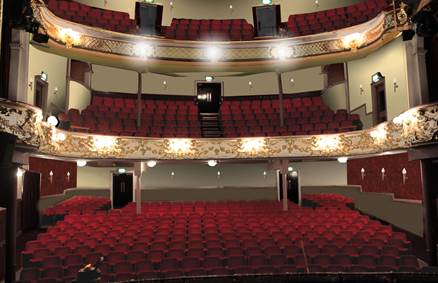
Austin-Smith:Lord’s conservation team has partnered with specialist interior designer Julia Grant to bring the B Listed auditorium at The Gaiety in Ayr back to its former splendour on behalf of the Ayr Gaiety Partnership.

The restoration of the auditorium is part of a wider, £2.4 million renovation and remodeling of the historic and much-loved B Listed Gaiety, which has been made possible by funding from the Social Growth Fund, Heritage Lottery Fund, Creative Scotland and Scottish Government (People and Communities Fund).

Over the next few months, the team will re-create the colours and feel of the Edwardian auditorium which was one of the country’s most popular variety showcases in its time, welcoming a host of stars such as Sir Harry Lauder, Ken Dodd and Johnny Beattie.

Austin-Smith:Lord has delivered the architecture and interior design for the wider, two phase project which is scheduled for completion later this year.

Phase 1 of the refurbishment of The Gaiety, which is one of Scotland’s oldest theatres, included upgrading of the ticket sales area and restyling of the entrance and foyer, improvements to the bar and café area ventilation and heating together with remodelling of the kitchen and additional back of house facilities.

Phase 2, which is now underway, includes improvements to the main foyer, front and back of house technical upgrades as well as the restoration of the auditorium, which also includes improved heating, ventilation and new lighting.

David Millar, Austin-Smith:Lord Director, says: “The Ayr Gaiety Partnership has bold ambitions to redevelop The Gaiety as the leading performing arts venue in south west Scotland and encourage performing arts and culture across the town and wider South Ayrshire region. We’re thrilled to play a role in this very exciting new chapter in the life of the much-loved Gaiety.”

The Gaiety, which opened in 1902, is especially notable for its decorative Rococo interior, which will be preserved and enhanced by the current project.

New Healthcare Centre in Swansea will serve increased patient demand

New Healthcare Centre in Swansea will serve increased patient demand

Work is now underway on a £3 million healthcare centre in Swansea which Austin-Smith:Lord has designed for a partnership of developer Healthcare Property Company Wales, Brynhyfryd Surgery and Abertawe Bro Morgannwg University Health Board.

The new Brynhyfryd Primary Care Health Centre, which is also supported by the Welsh Government and being constructed by WRW, has been designed to meet the changing demands and increasing number of patients in Swansea.

Replacing the current Brynhyfryd Surgery, the new building will accommodate both primary care and community services to achieve better health outcomes and improved access to services from within the heart of the community.

Brynhyfryd Primary Care Health Centre, which will extend over 1,080 square metres, will include Brynhyfryd Surgery, a treatment room and support spaces for Abertawe Bro Morgannwg University Health Board, training space for future GPs, shared waiting space and Lewis Pharmacy.

The new facility will also include purpose-built accommodation for community nursing teams and health board-led community services as well as improved car parking and disabled parking facilities.

Martin Roe, Austin-Smith:Lord Partner, says: “We are delighted to have designed the new Brynhyfryd Primary Care Health Centre. This new, high quality, inclusive and sustainable building will make a big difference to healthcare provision in the community by being designed to be both welcoming to patients and stress-free and easy to use for both visitors and staff.”

Robert Williams, Managing Director of WRW, adds: “We are delighted to be working with Austin-Smith: Lord, Healthcare Property Company Wales and Abertawe Bro Morgannwg University Health Board in delivering this high profile scheme for the community of Brynhyfryd. The new Primary Care Health Centre is an exciting development for WRW and will develop our experience and knowledge in this sector. We look forward to continuing our longstanding working relationship with Austin-Smith: Lord on this high quality scheme.”

Brynhyfryd Primary Care Health Centre, which is located on Llangyfelach Road in Swansea, is scheduled to open next year.


Please contact Joanna Harrison (07884 187404) or  Ilya Scott (07799 416476) of Real PR with any press queries.