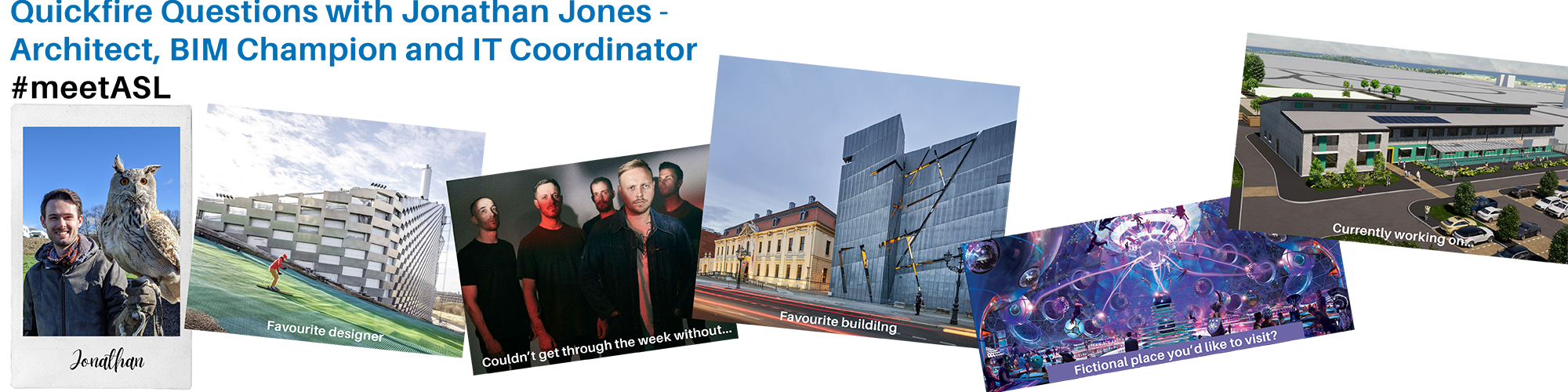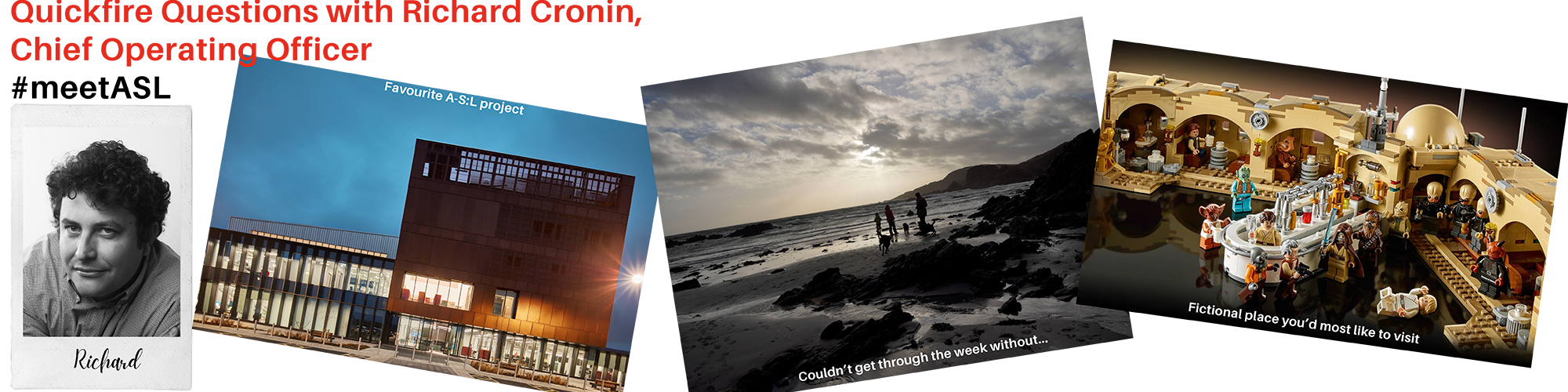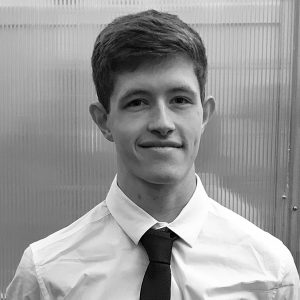
Quickfire Questions with Richard Cronin

Richard Cronin banner

Quickfire Questions with Richard Cronin

Name
Rich Cronin.

When did you join Austin-Smith:Lord?
August 1996.

What is your role within our Creative Collective?
Chief Operating Officer.

What are you working on at the moment?
Major transport and industrial jobs across the UK.

What inspires you most in your work?
The people around me. There are so many talented young folk in the Creative Collective I often just sit back and listen!

What aspects of your work are you most proud of?
Our transport and industrial back catalogue.

What lessons have you learned in your work?
To pick my battles and remember that the client is (usually) always right.

What is your favourite Austin-Smith:Lord project and why?
AMRC in Broughton. It was a great building to develop with Welsh Government and Airbus which was repurposed during the pandemic to develop ventilators, showcasing its flexibility.

What fictional place would you like to visit?
The Cantina Bar in Star Wars.

What is your pet hate?
Inconsistency.

Complete the following –  “I couldn’t get through the week without……..”
A walk with my family, dog and camera.

Quickfire Questions with Peggy Tsang

Peggy Tsang banner

Quickfire Questions with Peggy Tsang

Name
Peggy Tsang.

When did you join Austin-Smith:Lord?
September 2021.

What is your role within our Creative Collective?
Landscape Architect.

What are you working on at the moment?
Healthcare and education projects, including Ayrshire Hospice.

What inspires you most in your work?
Learning from my colleagues, and good team collaboration.

What is your favourite place/building/landscape and why?
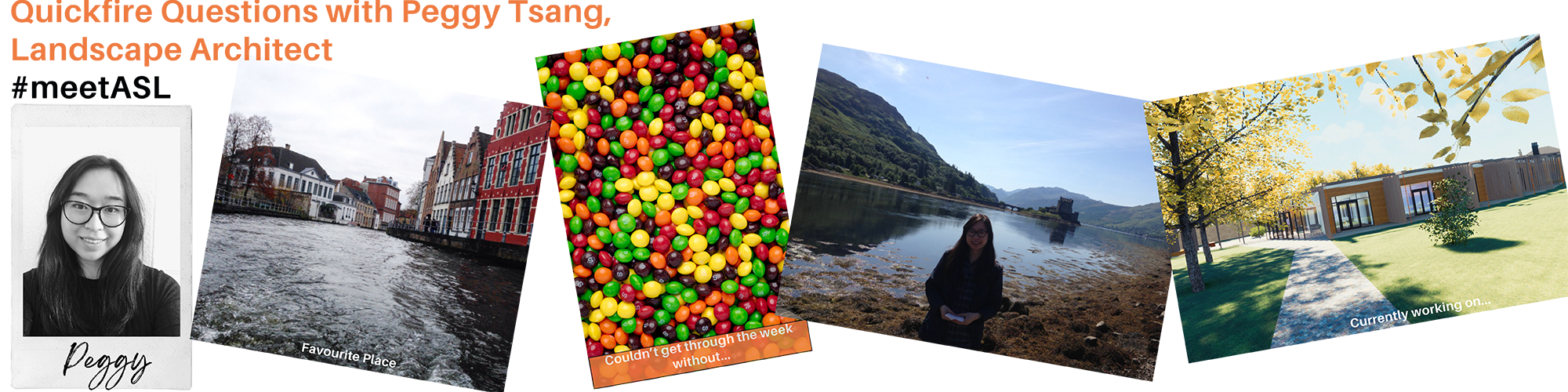
Bruges. Such a pretty and romantic city, plus it has great waffles!

What are the key issues facing our design professions in the 2020s?
As a Landscape Architect, people sometimes don’t know quite what we do! Our skills and qualities are sometimes overlooked in projects.

What aspects of your work are you most proud of?
Being able to contribute to local communities, and seeing people enjoying the space.

What’s something that recently made you smile?
Good food 🙂

What’s something you’re planning on doing in the next year that you’ve never done?
Getting married!

Complete the following –  “I couldn’t get through the week without……..”
My snacks.

Quickfire Questions with Tom Clarke

Tom Clarke banner scaled

Quickfire Questions with Tom Clarke

Name
Tom Clarke

When did you join Austin-Smith:Lord?
September 2021

What is your role within our Creative Collective?
Finance Apprentice

What are you working on at the moment?
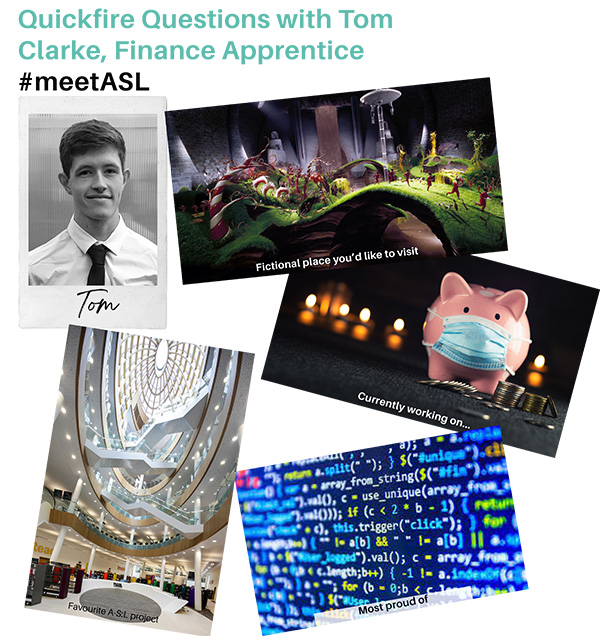
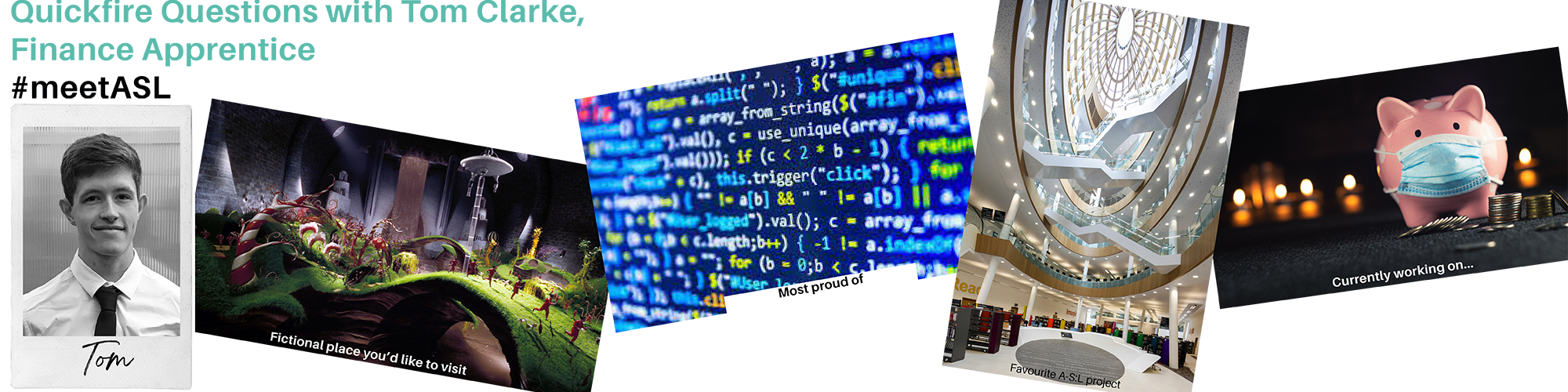
Chasing debt – the most interesting job…

What inspires you most in your work?
Learning new things

What aspects of your work are you most proud of?
Applied my coding knowledge from school to create macros within excel

What lessons have you learned in your work?
Office experience

What is your favourite Austin-Smith:Lord project and why?
Liverpool Central Library as it combines the old and new

What fictional place would you like to visit?
Willy Wonka’s Factory

What is your pet hate?
Numbers

Complete the following –  “I couldn’t get through the week without……..”
Asking Allan and Terence lots of annoying questions

Quickfire Questions with Mesha McManaman

Mesha McManaman banner

Quickfire Questions with Mesha McManaman

Name
Mesha, or ‘Meesh’ to most.

When did you join Austin-Smith:Lord?
August 2015.

What is your role within our Creative Collective?
Architect. I am also a RIBA Future Architects Mentor and a CPD Coordinator.

What are you working on at the moment?
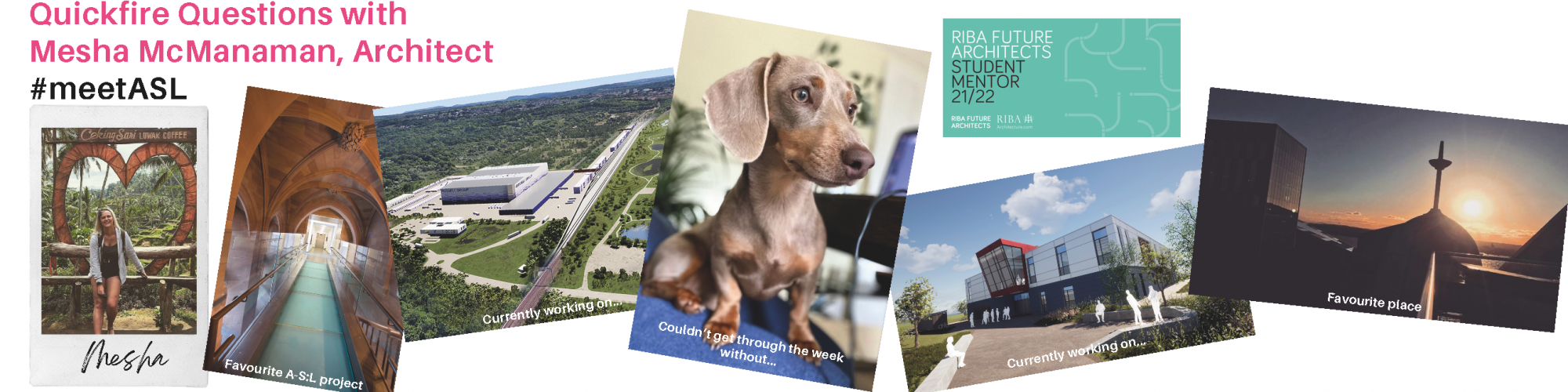
A real mixed bag at this very moment; jumping between Inverness Life Sciences and Innovation Centre, Glasgow District Regen Frameworks, been working up a walk-through video of a one-off house development and have a Logistics Hub currently in planning.

What inspires you most in your work?
My peers – we’re not called the “Creative Collective” for nothin!

What aspects of your work are you most proud of?
Problem solving – the satisfaction of finding a solution that has the end user at the forefront of the design… oh and then seeing it in use, functioning as intended. Bliss.

What is your favourite place / building / landscape and why?
I’m a sucker for a good sunrise/sunset. I think its the restorative effect, and how they somehow make time slow down. A great time for reflection.

What is your favourite Austin-Smith:Lord project and why?
Either Liverpool Central Library or John Ryland’s Library. I love it when old and new collide (or should I say, when it’s done well!).

What are they key issues facing our design professions in the 2020s?
Other than the obvious issues surrounding sustainability and the need to target net zero, I think competitive bidding is becoming far more aggressive, with a growing pressure to do more for less.

What’s something you’re planning on doing in the next year that you’ve never done?
Skiing and getting married (not at the same time!)

What’s the best advice you’ve ever heard?
“Nothing worth having comes easy” – Dad, repeatedly Est. 1991.

Complete the following –  “I couldn’t get through the week without……..”
My mini dachshund, Sydney. She is my little sidekick.

Quickfire Questions with Catherine Cosgrove

Catherine Cosgrove banner

Quickfire Questions with Catherine Cosgrove

Name
Catherine Cosgrove

When did you join Austin-Smith:Lord?
February 2006

What is your role within our Creative Collective?
I’m an Associate, an Architect and our sustainability champion. Having dual sustainability and conservation accreditations means I work on a wide variety of projects.

What are you working on at the moment?
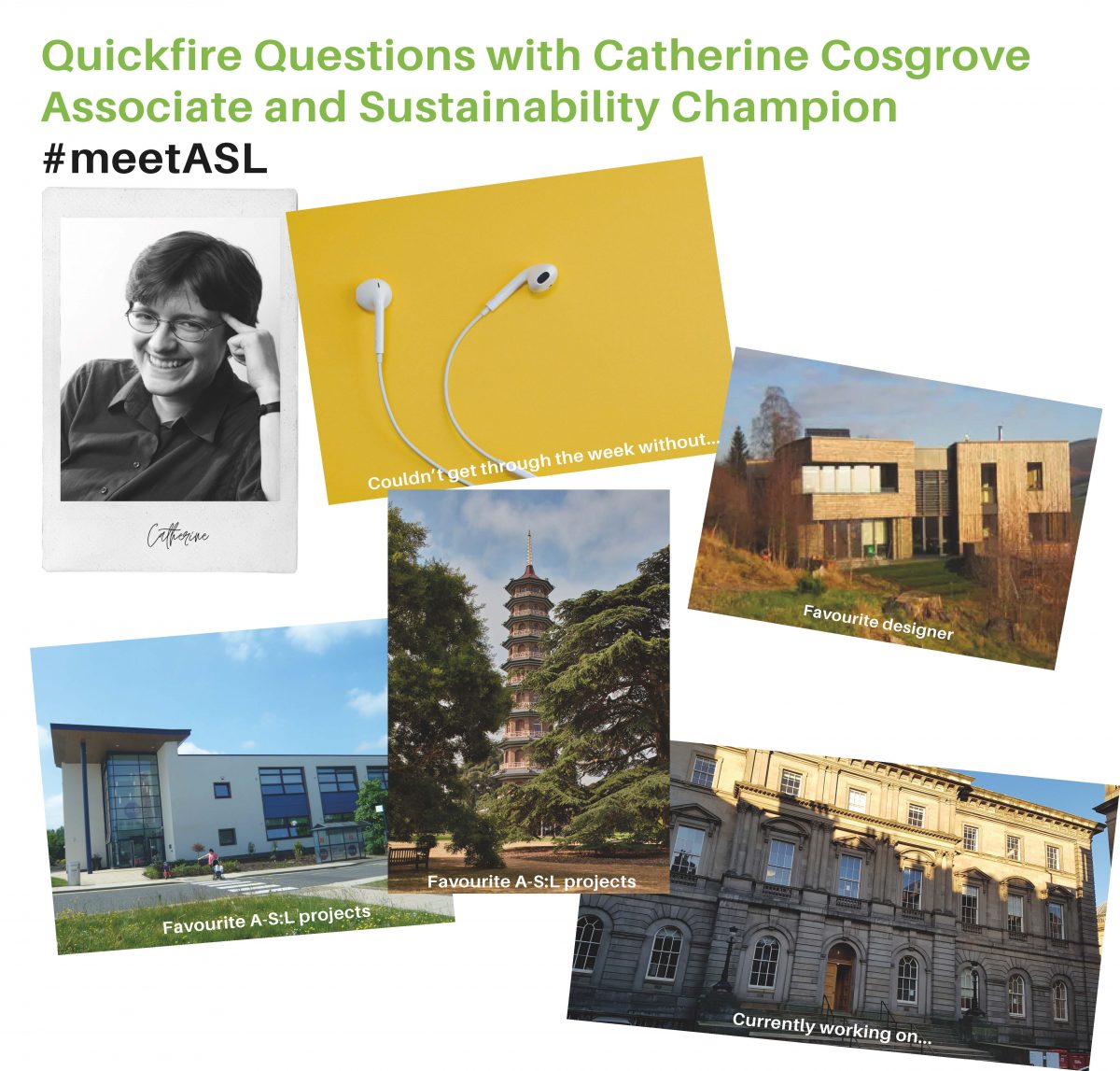
Fabric repairs to New Register House in Edinburgh. With it being a Grade A listed building containing a one of a kind collection we’re being very careful in identifying all the current problems before working out the repairs required.

What inspires you most in your work?
Learning and doing. Each project has a unique set of challenges and problems that leads me to searching out knowledge and information in all sorts of places. This then feeds into the next project and I can bring the knowledge together in new ways. There’s so much to learn from existing buildings that we’ve forgotten or overlooked.

What aspects of your work are you most proud of?
I’ve been involved in sustainable design for more than 30 years and during that time it has moved from being a niche subject to being central to our profession. During that time my confidence in speaking out about sustainability has grown and I’d like to think that the people I’ve worked with have all picked up some of my knowledge and enthusiasm.

What lessons have you learned in your work?
No question is too silly to ask, especially when you don’t understand something. That’s how you learn. And to add in a couple of spare incoming services ducts before the concrete floor slab gets poured.

Which designers / projects do you most admire and why?
The many sustainability pioneers that I’ve met over the years and their dedication to keep reaching for the best sustainable design despite the problems in their way. Howard Liddell and Sandy Halliday of the Gaia Group have probably been the most influential in how I approach projects.
Image in header: Howard Liddell and Gaia Architects’ house Plummerswood. Photograph by Sandy Halliday

What is your favourite Austin-Smith:Lord project and why?
Two that I worked on at the same time: South Lanarkshire College Low Carbon Teaching Building; and Kew Garden Great Pagoda. The Low Carbon Teaching Building is the most sustainable project that I’ve worked on – net zero energy use, environmental certification for all materials, zero waste in construction and BREEAM Outstanding. The Kew Pagoda was more about restoring the Grade 1 building without making it look like any new work had been carried out and adding in the 80 new dragons! Both were incredibly challenging in different ways and I learned a lot in a very short space of time.

What’s something you’re planning on doing in the next year that you’ve never done?
Learning how to make films using my mobile phone. One step closer to an ASL vlog!

What’s something that recently made you smile?
Shaun Keaveny’s Community Garden podcast

What’s the best advice you’ve ever heard?
Don’t tie your shoelace in a revolving door

Complete the following –  “I couldn’t get through the week without……..”
Music, music, music! If there’s no music around me, there’s always music playing in my head…

Austin-Smith:Lord commits to Net Zero Emissions by 2030

default

Austin-Smith:Lord commits to Net Zero Emissions by 2030

Blog by Graham Ross, Chief Executive, Austin-Smith:Lord

There’s been a blizzard of declarations and pledges made by governments and businesses at COP26. Net zero targets have been set and commitments to reduce emissions, carbon and waste and restore nature have been pledged. These have been met with some accusations of ‘greenwashing’ and skepticism that climate action will fall short of the commitments made.

At the time of writing negotiations at COP26 in Glasgow are ongoing, grappling to find global agreement to address climate change. It is easy to feel a sense of powerlessness in these circumstances. However, undeterred, Austin-Smith:Lord remain focused on doing what we can as a Creative Collective design practice, and as a business with Studios in five UK cities, to continue to advocate for net zero and circular design to reduce carbon, energy, waste and restore biodiversity.

At Austin-Smith:Lord, following all staff workshops earlier this year, we adopted our refreshed Mission, “to enhance life and environments by design”. To address the urgencies of our time, and inspired by our founders’ guiding principles, we also restated our commitment to promoting, Design Excellence, Sustainability, Health and Wellbeing, Collaboration, Integrity and Professionalism, Knowledge Sharing and Life-long Learning.

We also agreed, following our 2021 all staff conference in September, to commit to be a Net Zero Emissions practice by 2030. To this end we have submitted our SME Climate Commitment to the UK’s Climate Hub (part of the UN’s Race to Zero campaign) to be Net Zero Emissions by 2030, and to monitor and report on progress against this annually.

We are currently developing our Net Zero Action Plan and considering the Greenhouse Gas Protocols, direct and indirect emissions and the implications of Scope 1, 2, and 3 categorisations on the way we work and the work we do. It will be a challenge. We will seek expert guidance and publish our Action Plan as part of our next, and first, Annual Report.

Initial analysis would suggest that we can achieve our Scope 1 and 2 targets far sooner than 2030. To this end we will seek to identify and publish incremental targets for 2022 and every year thereafter through the coming decade. This should ensure early impact and avoid deferring action to a later date.

We were also proud to endorse the RIBA / Architects Declare – Built for the Environment report and its recommendations and we restate our support and eagerness to work with our peers and others in the design and construction community to progress this agenda. We also welcome the recent publication of Architects Declare Practice Guide 2021 which outlines a Practice Roadmap alongside a Project Design Guide which we will look to embed in to our way of working.

Austin-Smith:Lord has a long track record, demonstrable commitment and expertise in sustainable design practice. But we recognise the urgent need to do more and to make a positive impact by design.

Today the UN COP26 Climate Change Conference theme focusses on Cities, Regions and the Built Environment. As architects, landscape architects, conservation architects, urbanists and interior designers we want to ensure we can make a positive impact. Working together, and in collaboration with others, we intend to make effective progress and to learn from others, share knowledge and advocate for climate action in our professions and through the work we do.

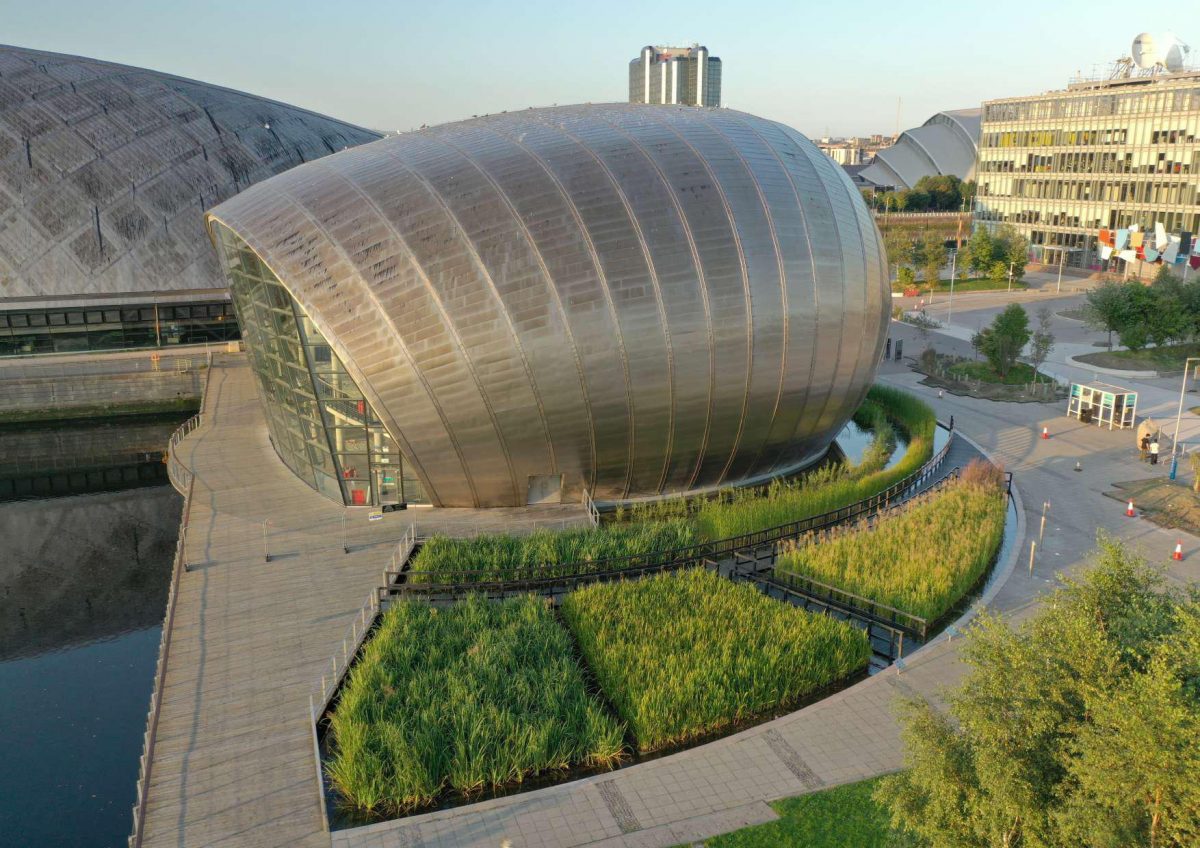
Image Credit: Glasgow Science Centre and HawkAye Scotland

Quickfire Questions with Aeddan Berry

Aeddan Berry banner scaled

Quickfire Questions with Aeddan Berry

Name
Aeddan Berry

When did you join Austin-Smith:Lord?
June 2021

What is your role within our Creative Collective?
Part 2 Architectural Assistant

What are you working on at the moment?
Old College, Aberystwyth

What inspires you most in your work?
Our ability to affect our environment for the better.

What aspects of your work are you most proud of?
Sensitivity to people and place.

What lessons have you learned in your work?
Interactive collaboration

Which designers / projects do you most admire and why?
Frank Lloyd Wright, GOAT

What is your favourite place / building / landscape and why?
Millennium Centre, Cardiff, inspired me to pursue architecture

What fictional place would you like to visit?
Hogwarts

What’s something you’re planning on doing in the next year that you’ve never done?
Part 3!

What’s the best advice you’ve ever heard?
Y Gwir yn Erbyn y Byd

Complete the following – “I couldn’t get through the week without…”
Coffee

Shaping Tomorrow Together

merrylee

Shaping Tomorrow Together:
Up-skilling and Net Zero Carbon literacy in the architectural profession and education

Blog by Anna Blamire-Brown, Certified Passive House Designer, Austin-Smith:Lord

There is nothing new about designing buildings with carbon in mind, but for many built environment professionals, it can still seem like unfamiliar ground. The recent RIBA Built Environment Summit, organised to coincide with COP26, was a stark reminder that governments and businesses can no longer delay action on climate change. For our industry this means ensuring that we are equipped with the skills and knowledge to assess and actively reduce embodied and operational carbon throughout the design process.

The built environment currently accounts for 38% of global energy related greenhouse gas emissions – a figure that was mentioned many times during the conference and highlights the pivotal role of the industry in the fight against climate change. A huge proportion of potential carbon expenditure is tied up in early-stage decisions, so it is essential that anyone with a hand in commissioning or designing a project understands the impact that each of their choices can have.

We have made great strides in recent years, with more practitioners than ever taking up training opportunities such as the Certified Passive House Designer qualification, however, it is clear that this up-skilling still needs to be accelerated in response to the climate crisis.

The ‘Shaping Tomorrow Together’ conference session addressed some of the questions around how to ensure sustainable design competence in the profession. In light of the urgency of the situation, it is evident that there needs to be a two-pronged approach to training – it will not be enough to focus solely on university education, as much of responsibility for shaping the built environment in this critical decade will sit with those of us who are already practicing.

In spite of this, equipping students with Net Zero Carbon knowledge is undoubtedly critically important to safeguarding the long-term viability of our planet. While some universities have been ahead of the game in this respect, it’s fair to say that for many years low carbon design has been side-lined within taught courses.

Now, however, it’s apparent that real change is coming. Questions are being asked such as: ‘Should students be allowed to graduate without Passive House knowledge or without being able to calculate the embodied carbon of their material choices?’. ACAN (Architects Climate Action ­Network) is one of the organisations campaigning for a greater focus on sustainability within education. Their objective is pretty clear: “Calling all architecture students, graduates, professionals. Your education is failing you! Help us change that.” (https://www.architectscan.org/curriculum-campaign).

Another question is whether the culture of architecture schools is too pro-individualism and ‘crits’ somehow instil in us a fear of admitting that we don’t – and can’t – know everything. Real world projects regularly call on the expertise of a wide variety of specialists, but popular culture would often have us believe than each architect is an island. Would some of the time allocated to individual design studio projects be better assigned to modules that build interdisciplinary collaboration skills?

Tom Emily and Victoria

Of course it can be difficult to include this sort of teaching, not least because curriculums are already packed. Heriot-Watt University’s Architectural Engineering course now includes an interdisciplinary module which seems to be very successful at encouraging collaboration. Students taking the module must work together to address competing priorities; an approach that breeds mutual respect between the disciplines, and if transferred into practice could help to combat confrontational tendencies in the industry.

For many years, experts have been saying that we need to break down silos and work together on innovative solutions to the climate crisis – if we are to stand a chance of doing this on real-world projects, we must not ignore it in academia.

As well as collaboration skills, all built environment students and professionals should possess the technical knowledge to assess the impact of certain design approaches and challenge the brief if required. Free resources such as the Climate Framework library (https://www.climateframework.com/library-intro) and the LETI guides (https://www.leti.london/publications) offer a wealth of opportunity for self-guided learning, but the level of Net Zero Carbon design literacy afforded by these initiatives shouldn’t be an optional extra – it should be central to formal architectural education and continuing professional development.

It is clear that retrofit knowledge also needs to be given greater precedence in architectural education. As highlighted by the AJ’s #RetroFirst campaign, the greenest building is one that already exists. Architects entering the profession should possess the practical skills to help clients breathe new life into their existing buildings, as well as the confidence to sell them this approach in the first place. While some retrofit knowledge can be taught in a classroom, it is on site that the best experience is gained – yet another case for a more practical approach to training our future architects.

The standard of student work in competitions such as the Solar Decathlon Build Challenge (https://www.solardecathlon.gov/) is evidence that there really is no better way to learn than through doing. In the past, the only way for an architecture student to get hands-on involvement on a building site would have been to undertake work experience with a contractor or pay to attend a summer school. However, external factors can often mean that these aren’t viable options for many individuals. In light of this, academic institutions should seek to provide equal access to similar opportunities, through making practical learning an essential component of taught courses.

The efficacy of practical experience is yet more proof that practice and academia should go hand-in-hand. Training up the next generation of architects in Net Zero Carbon literacy needs to be done in parallel with those already practicing. We should aim to avoid a situation where assistants and newly-qualified architects are fully clued-up, but decision makers are still lacking in knowledge and confidence.

The ARB’s sustainability guidelines call for architects to be pro-active and take on the responsibility to re-skill ourselves. However, many argue that tougher regulation is the only way to ensure that every professional meets an acceptable level of competence. Following the advocacy of AIA CA, the state of California now requires licensed architects in the state to be educated in how to deliver Net Zero Carbon (https://aiacalifornia.org/net-zero-carbon-continuing-education-signed-into-law/). Is it about time we adopt a similar approach in the UK?

Quickfire Questions with James Gould

James Gould banner scaled

Quickfire Questions with James Gould

Name
James Gould

When did you join Austin-Smith:Lord?
February 2019

What is your role within our Creative Collective?
Interior Designer

What are you working on at the moment?
Education sector projects for University clients, and helping out on the colossal Fitzalan High School in Cardiff (Picture in header: Cardiff School of Technology Phase 3)

What inspires you most in your work?
Putting myself in the position of end-users, and imagining how they will interact with the spaces we create. It means a lot to get this right and receive positive feedback. Inspiration for design comes from all over the place however.

What aspects of your work are you most proud of?
I would say mainly my attention to detail. I like to get right down into the small things that make big differences to a design.

What is your favourite place / building / landscape and why?
I’ve always had an affinity for Centre Parcs, ever since I was a kid. Something about staying in the forest makes it feel separated from the outside world, and who doesn’t like going down the rapids a million times? (Picture in header taken by myself – Centre Parcs Rapids)

What are the key issues facing our design professions in the 2020s?
The Climate Emergency – without a doubt. Reuse and refurbishment should always be the first port of call for existing buildings. Also, in the short term, the effect the pandemic is having on the way businesses work. Ideas are changing on how much traditional office space is required, the effect of flexible working policies, and how to repurpose newly vacated spaces.

What fictional place would you like to visit?
Oof, tough one. Being a self-confessed gaming nerd, I’d have to say ‘Rapture’ (an Art Deco, mid-century utopian/dystopian under-water city from Bioshock), OR simply, ‘The Continent’ from The Witcher 3.
(Picture in header: Welcome To Rapture by mbanshee)

What’s something you’re planning on doing in the next year that you’ve never done?
Buy a house.. with any luck! Also, go and visit my brother in the U.S. – Definitely seeing the sights of NYC, and possibly going for a skiing trip whilst over there.

Complete the following – “I couldn’t get through the week without…”
Copious amounts of tea, a takeaway, and the gym – It’s all about the balance.

A View from the Blue Zone :
impressions of COP26 from the inside

header

A View from the Blue Zone :
impressions of COP26 from the inside

Blog by Catherine Cosgrove, Associate and Sustainability Champion at Austin-Smith:Lord. Chair of the Scottish Ecological Design Association.

When it was announced that COP 26 was coming to Glasgow I thought that this would be an amazing opportunity to meet with and learn from people from all over the world about sustainability and climate change. Alongside my role at Austin-Smith: Lord, I’m also currently the Chair of the Scottish Ecological Design Association (SEDA). We were advised that the UN were encouraging groups from all over Scotland to apply for observer status at COP 26. A year and many, many forms later, SEDA were awarded observer status and five delegate places for each week. I chose to attend in the second week, which includes themes on resilience, transport and the built environment.

So what have been my first impressions? The scale of this conference is enormous. Not just in terms of how long it takes to walk through the event campus but also in terms of the subjects covered and the amount of people who are attending. It’s like rush hour in Central Station all the time. There are so many people with really interesting contributions. Everywhere you turn people are blogging, filming, making announcements and pledges. Earlier today I happened to be standing in Zone E, just beyond the television cameras from the international news feeds, and there was what looked like a walking scrum of people, lights and cameras that passed in front of me. Nancy Pelosi, the Speaker of the US House of Representatives was on her way to an event and was surrounded by the media every step of the way. This sort of thing doesn’t usually happen at any of the other sustainability conferences I’ve attended.

There is a buzz, a willingness to make things happen and to come together to make a difference. How to get more people involved is a common topic. It’s also interesting to hear government and business leaders admitting that they are much better informed that they were even three years ago and that many have identified what actions they can take to make an immediate impact.

But another theme that is also clear is that we’re not even close to meeting the climate pledges that have already been made, let alone set even more ambitions targets. Progress is too slow. Those nations who can afford to spend more on climate mitigation are reluctant to commit more funds and smaller nations are focussing on surviving the impact of climate change already. Just and equitable transition to low impact living are common themes of many presentations.

Many delegates also seem to have a lack of urgency and focus. In the Blue Zone there’s an area set aside for exhibition pavilions from many countries, organisations and interest groups. There are dozens of presentations happening at any one time and its common to hear applause or cheering breaking out across the arena. But there are also many people using laptops, on phones, answering emails and catching up on messages while sitting in these presentations. They aren’t giving them their full attention, they aren’t invested and make no contribution. It’s hard not to see this as part of the reason that we’re not making progress on our climate commitments.

There are moments that give cause for hope. In the exhibition zone there are some pavilions that are full of people and excitement. The indigenous peoples pavilion and the Nigerian pavilion sit side by side, are full of life and colour and a joy to be around. I loved the bamboo bicycle and the Pavegen technology that can generate electricity from walking over it – now there’s something to install in Central Station. I loved the presentation from Just Diggit (www.justdiggit.org), a Dutch Organisation working in Africa, and their way of linking story telling and technology to increase public involvement in their sustainability initiatives.

Everyone was exited anticipating Barak Obama’s speech. His session was ticket only and few delegates had the opportunity to be there in person. It was available on the COP 26 Platform and via You Tube, with most people watching or listening to the livestream. I ended up sharing my phone with six others so we could all hear him at the same time. His talk was both inspiring and a reminder that pledges are easy to make but hard to put into practice. What I took from it was his encouragement for people to take their own action to help change their local communities, not to wait for governments to do something. It’s the same conversation that we’ve been having in Austin-Smith: Lord. Everyone has the power to make positive decisions that can help the environment and we can do that every day.

I’m looking forward to the next two days of COP 26 and what opportunities that might bring. Sharing knowledge and collaboration are key to making progress and I’d like to think that Austin-Smith:Lord and SEDA can help on both of those subjects.